Returning to the track

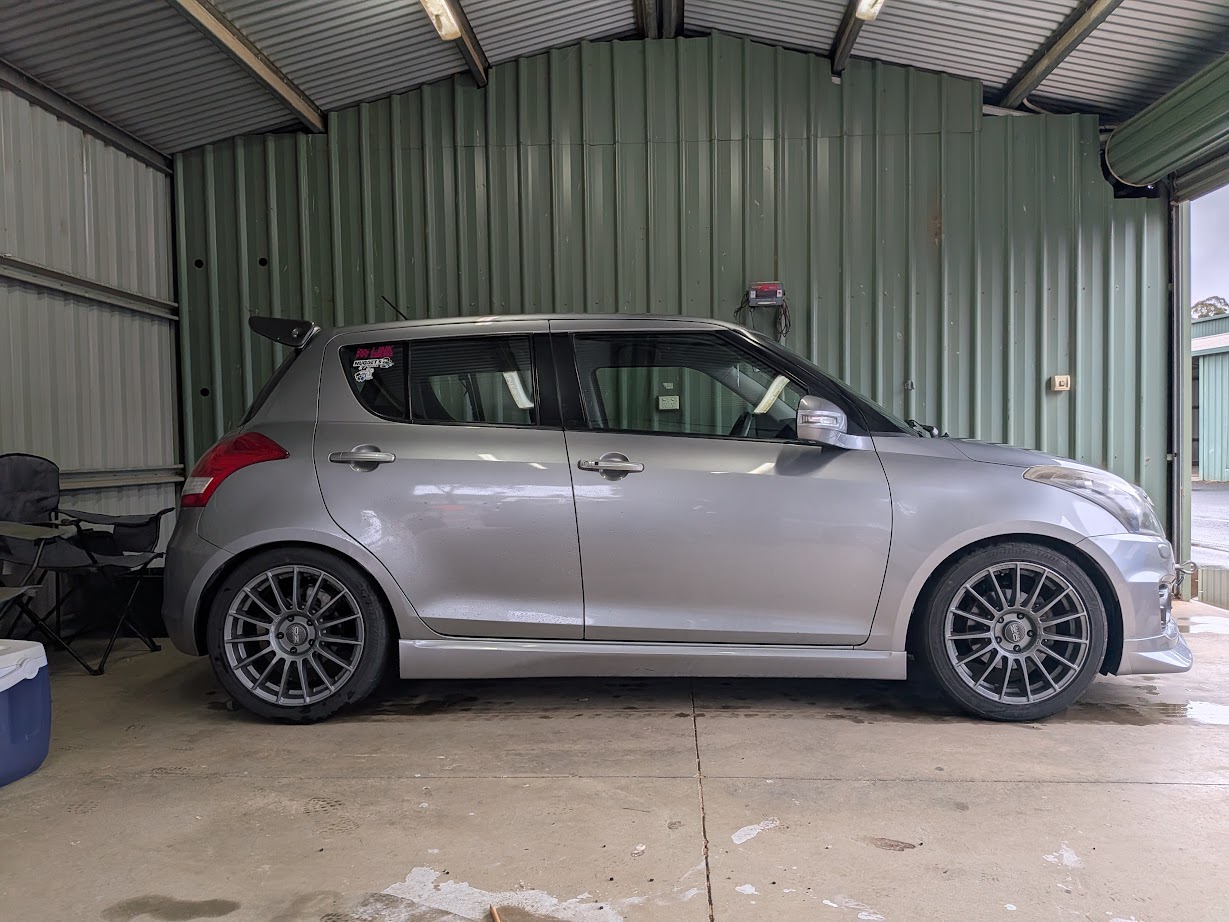
The time had come to take the Swift back to the track.

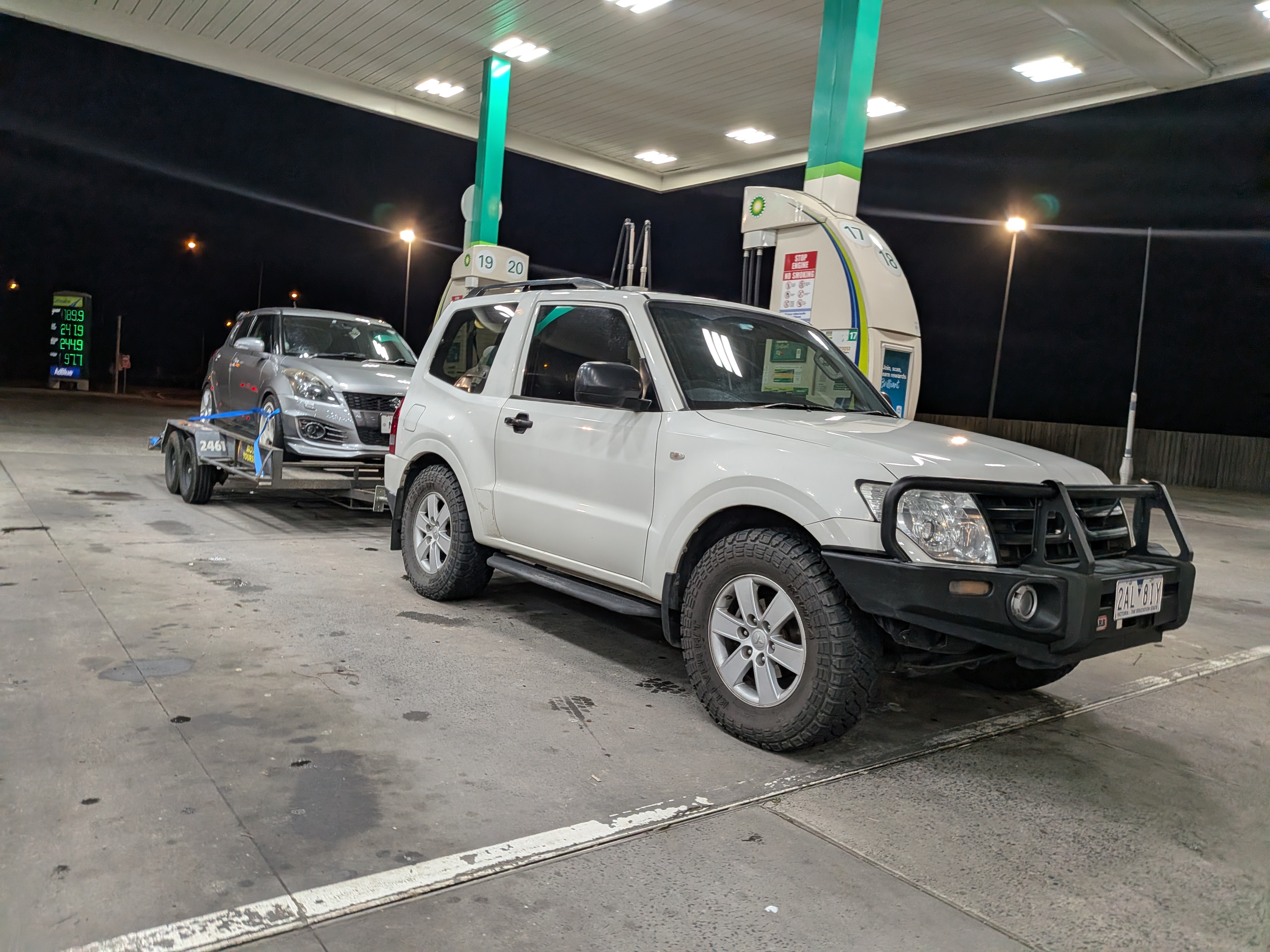
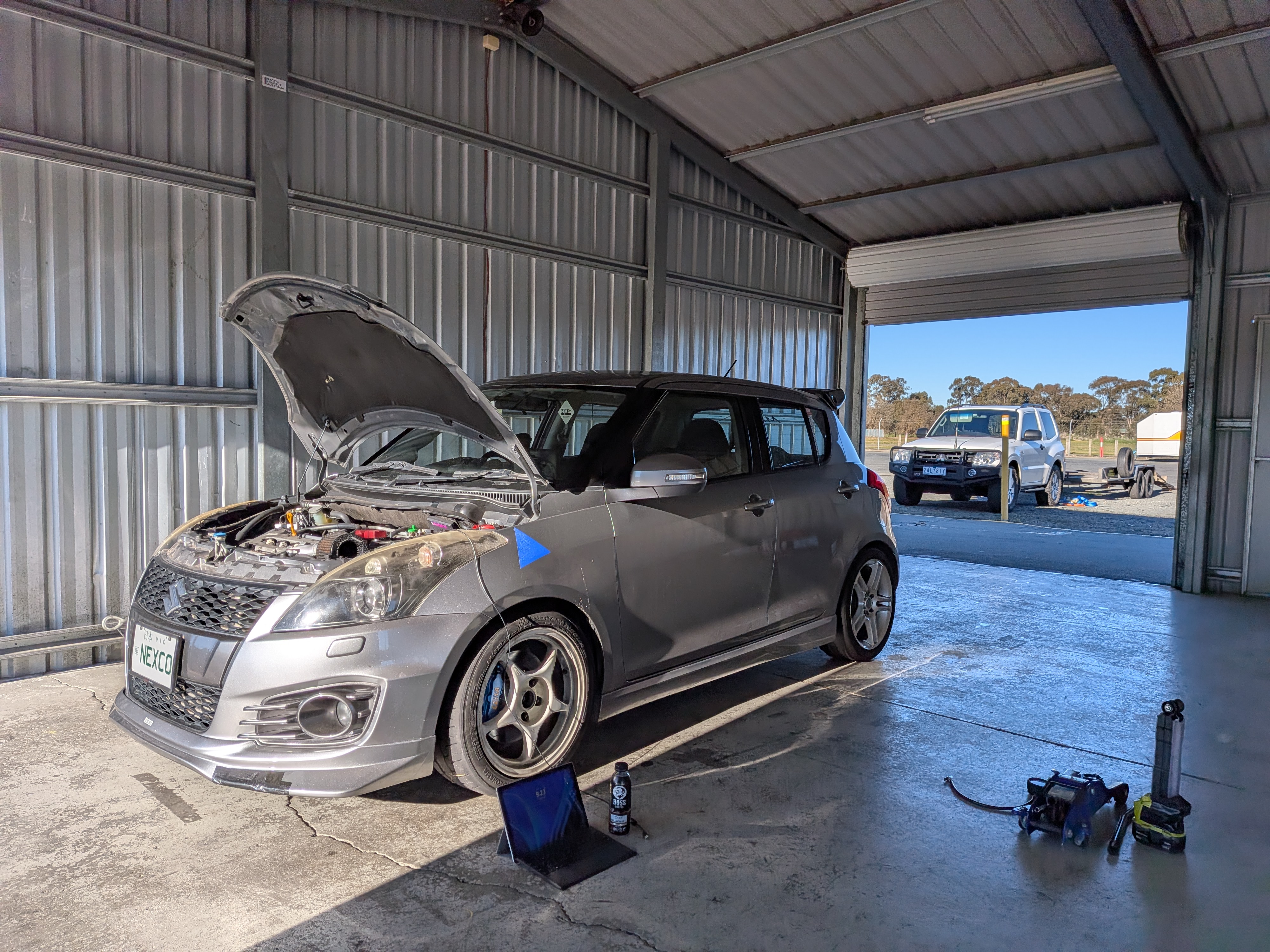
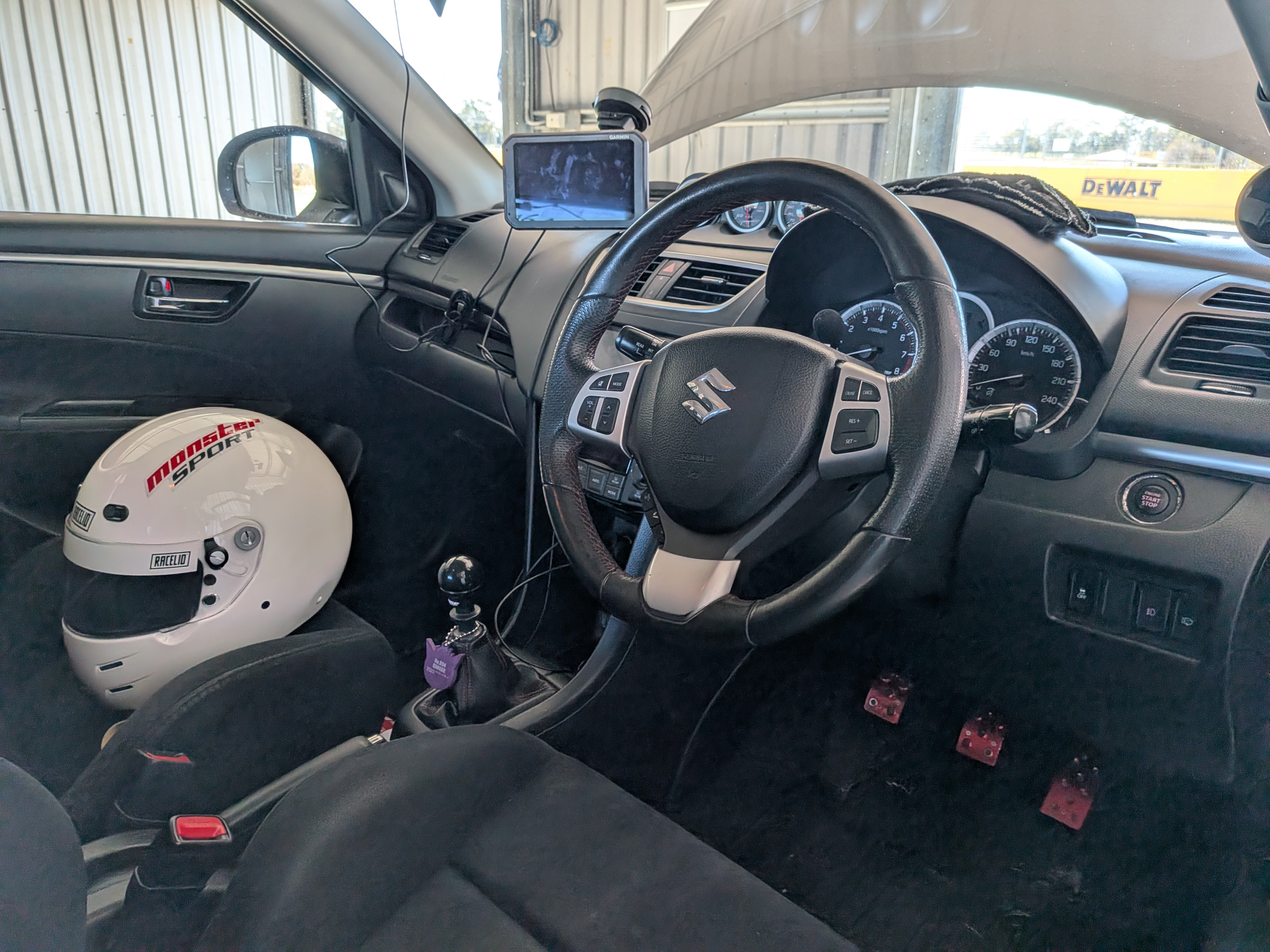
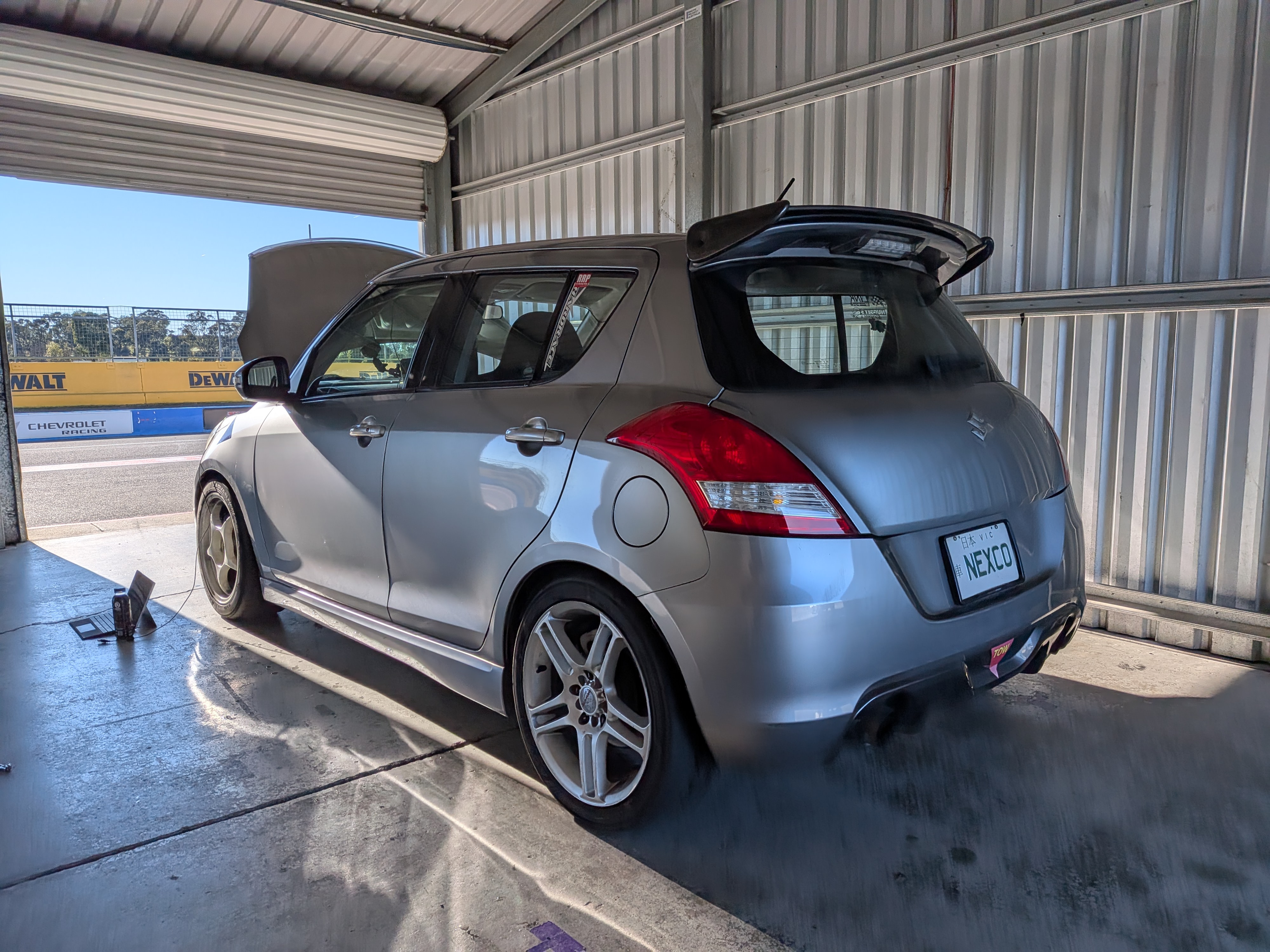
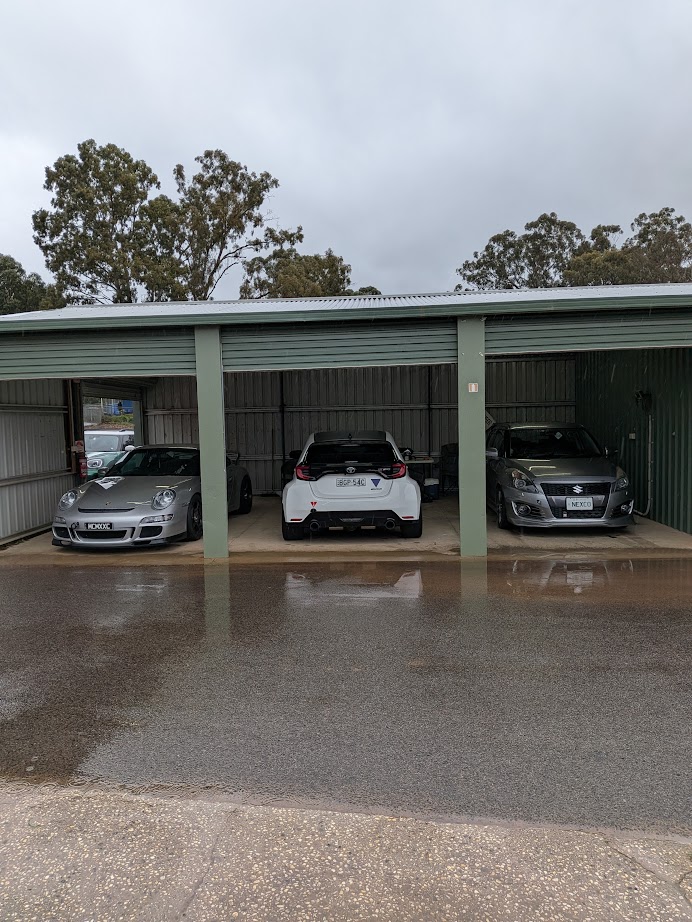
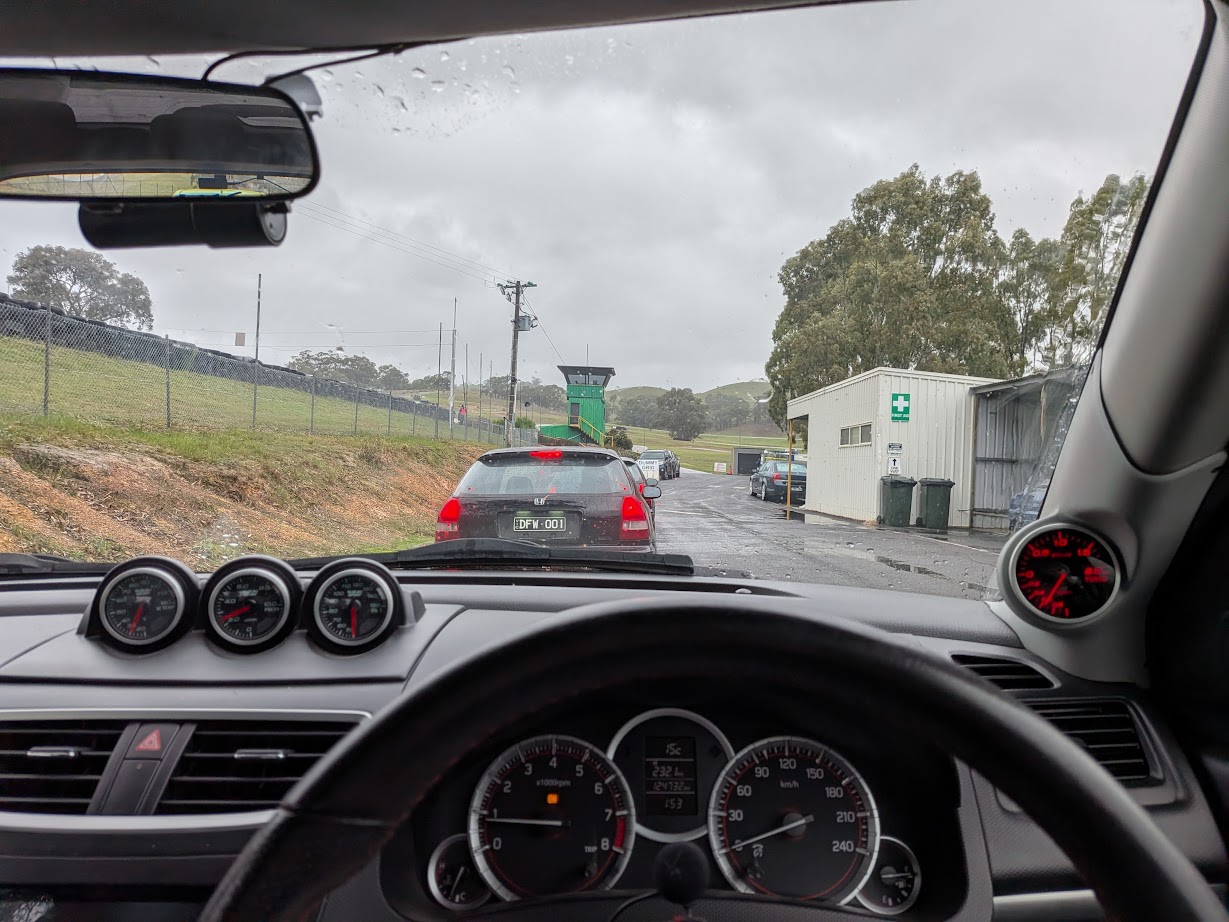
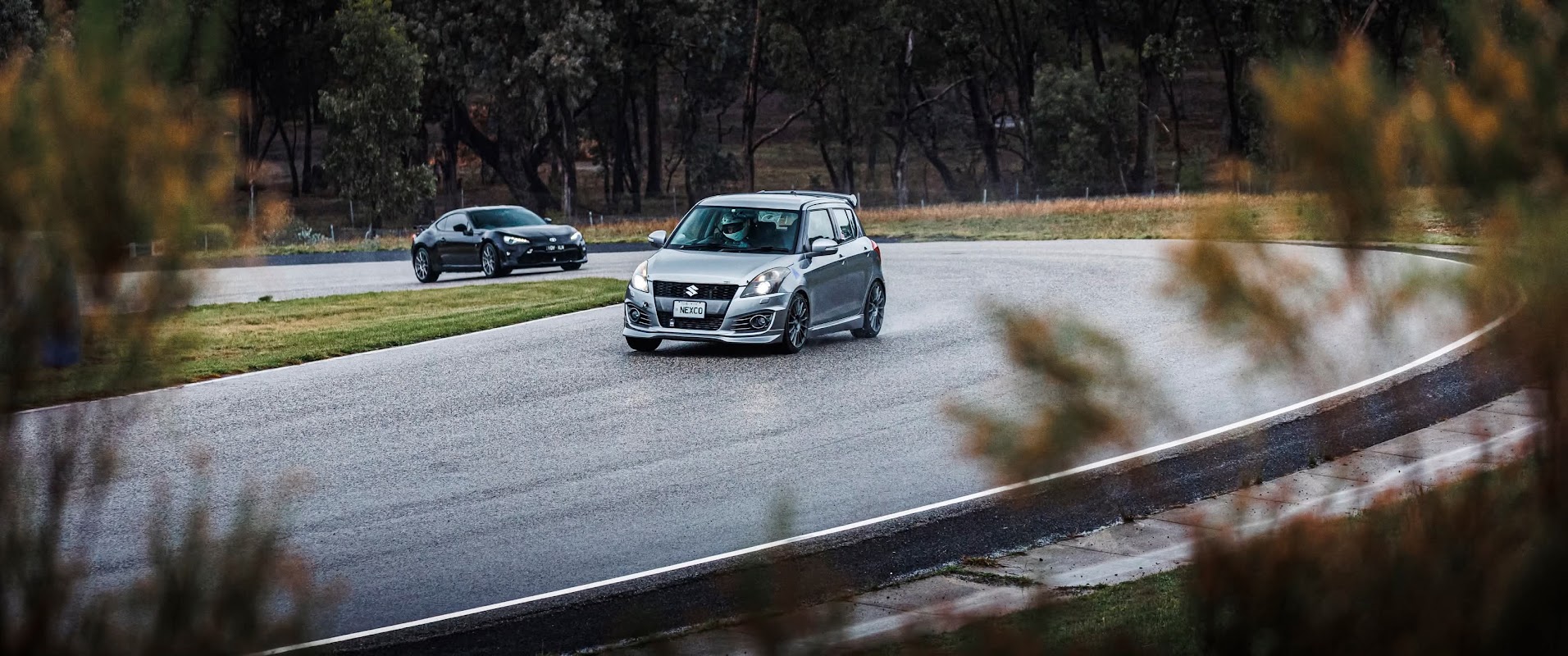
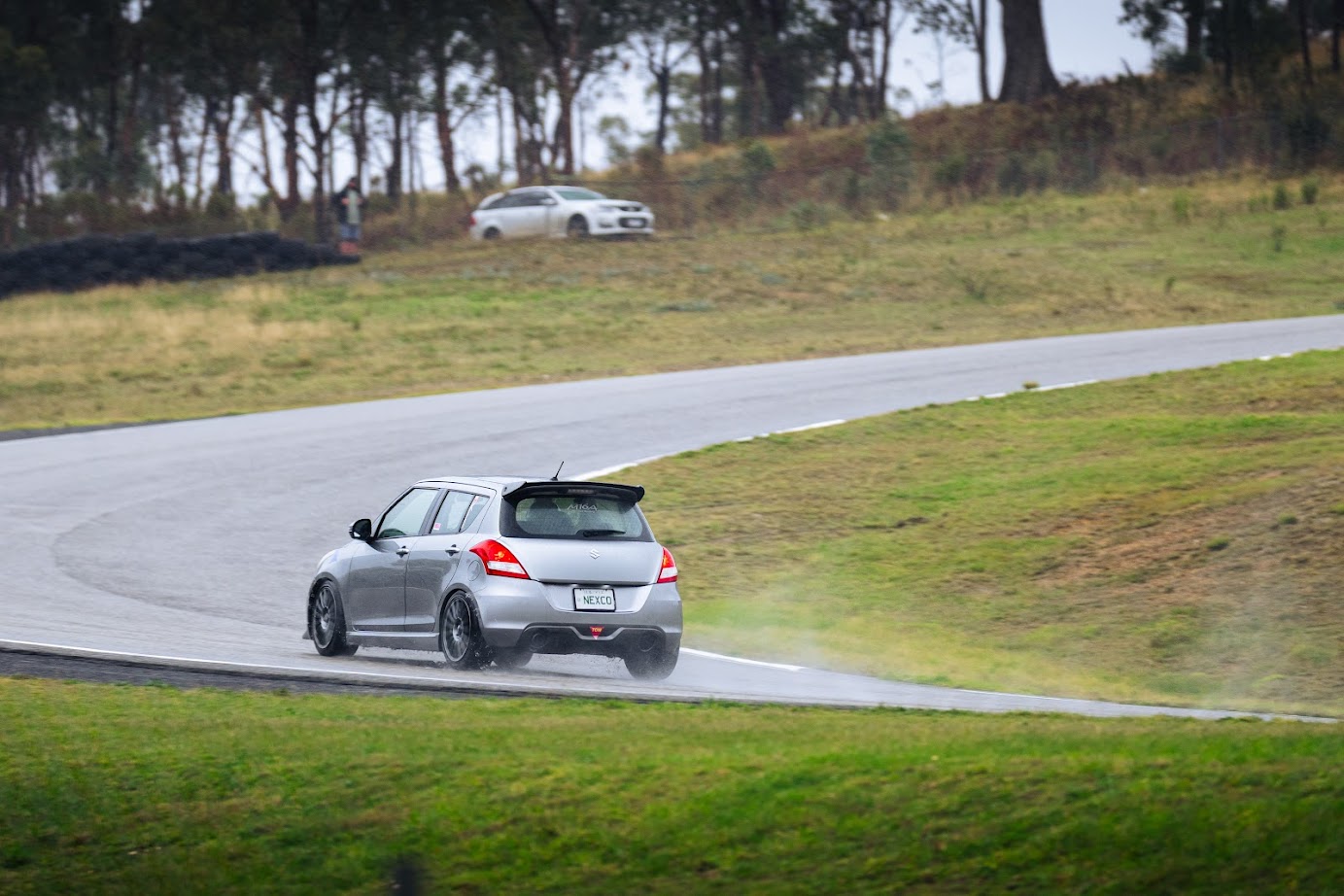
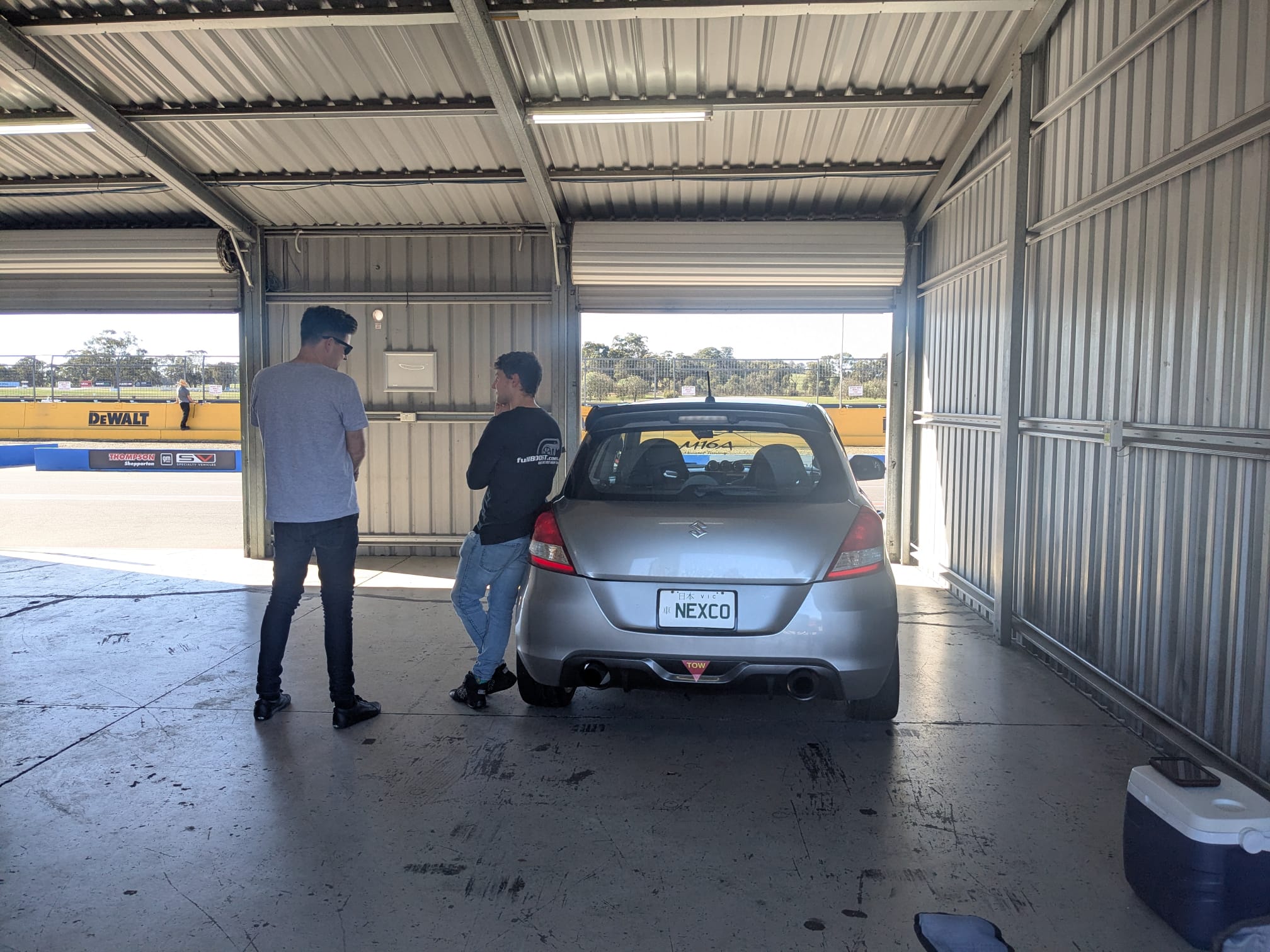
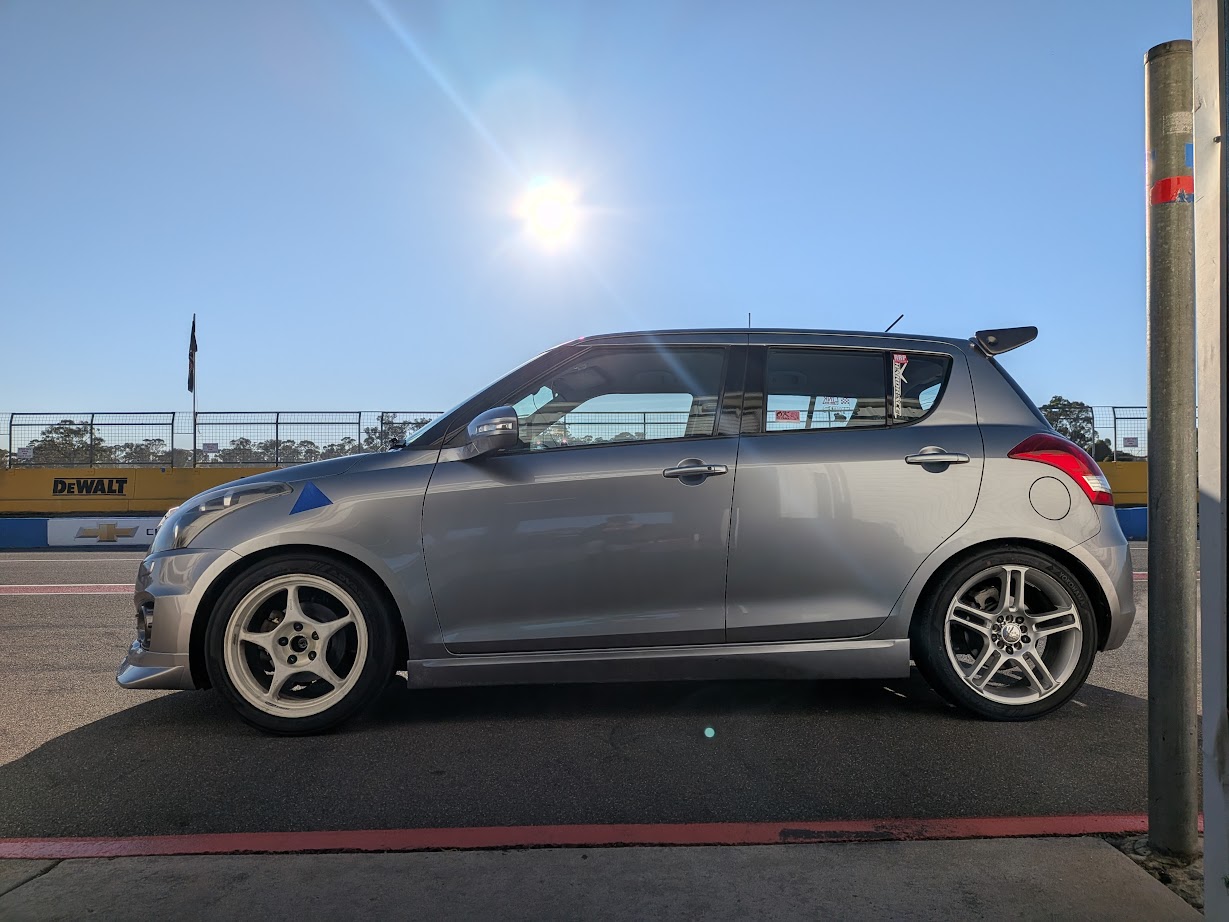
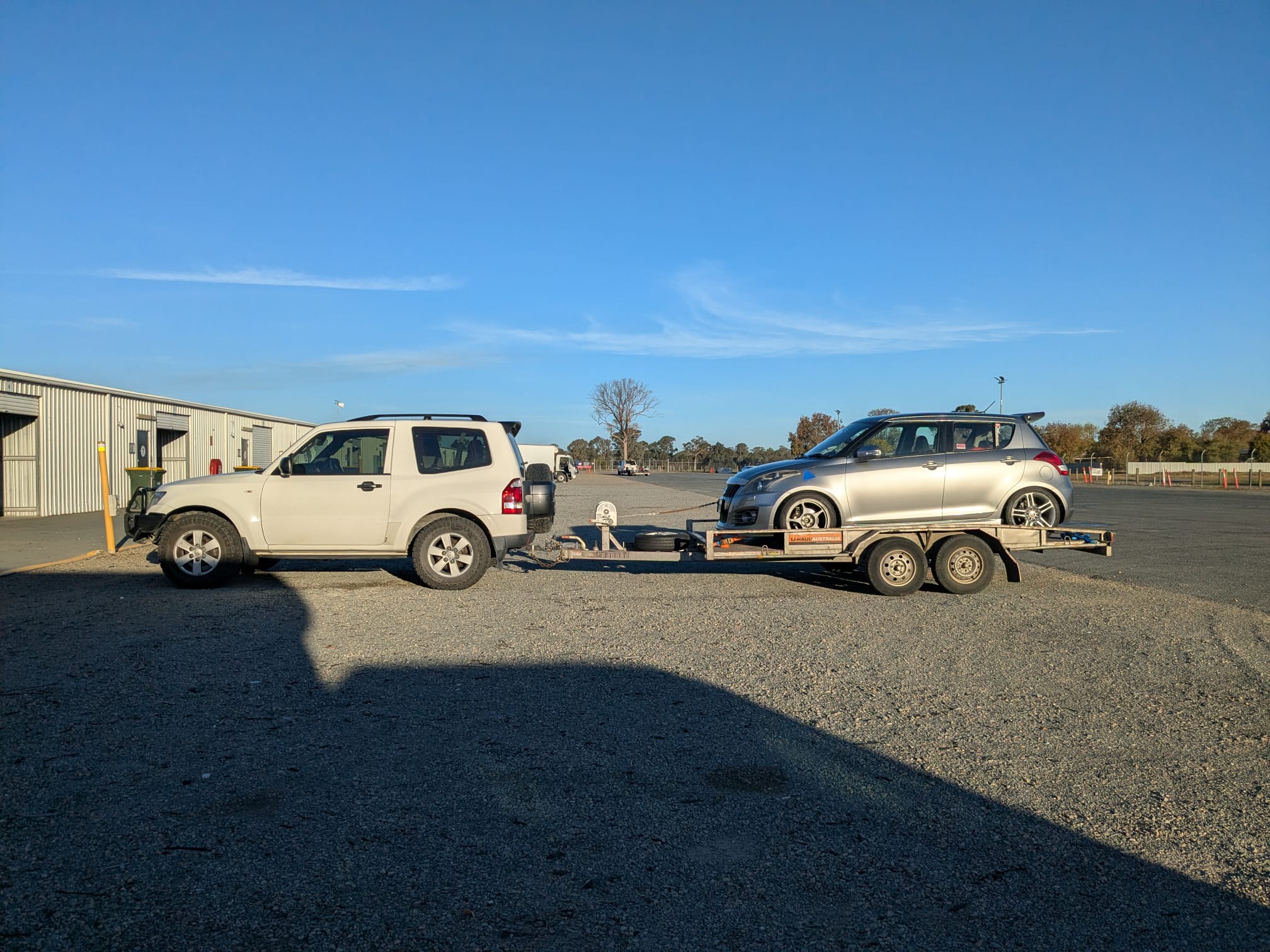
Last Monday, 15/12/2025 I participated in an open pit lane day at Winton Motor Raceway here in Victoria, Australia.

The car performed really well, oil temps hit about 110C after a few hot laps but appeared to stay consistent. Water temp hardly hit 90C and fans worked as intended via the Link.

The car will take some time to get used to with the new power but gearing feels a bit nicer now at Winton. I think it’s faster keeping the car in 3rd in some corners rather than shifting from 4th to 2nd, which I struggle with.

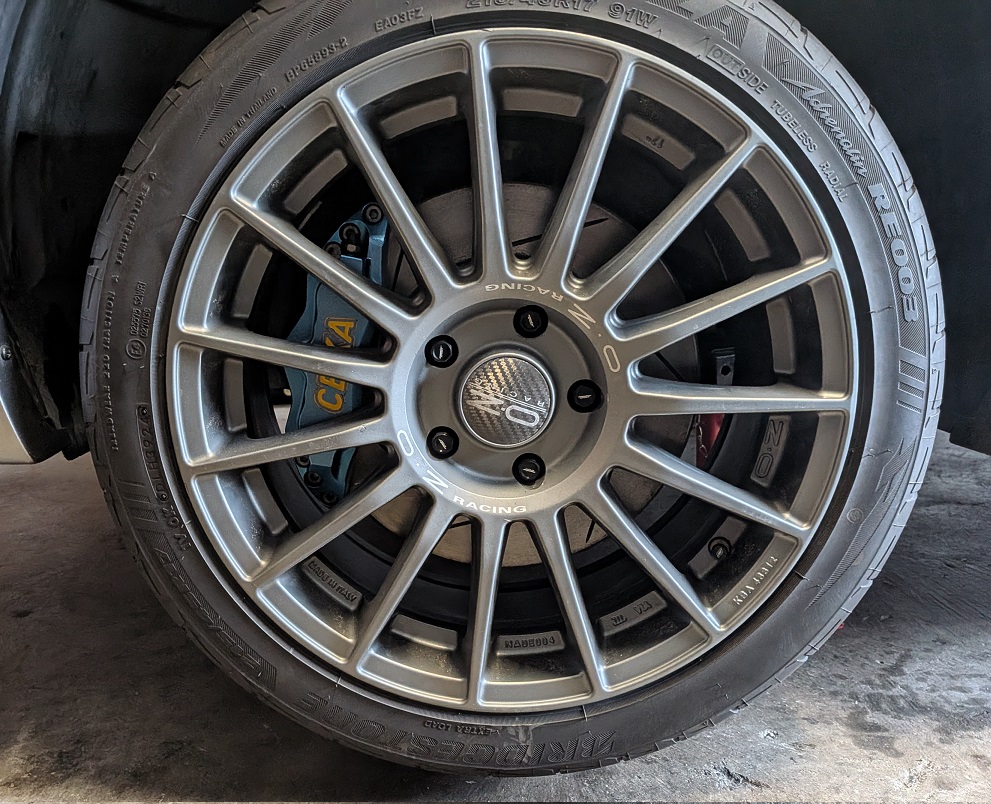
I am starting to learn the AD09’s a bit better too. They’re definitely not as grippy as my previous RE-71R’s but are wearing far slower.

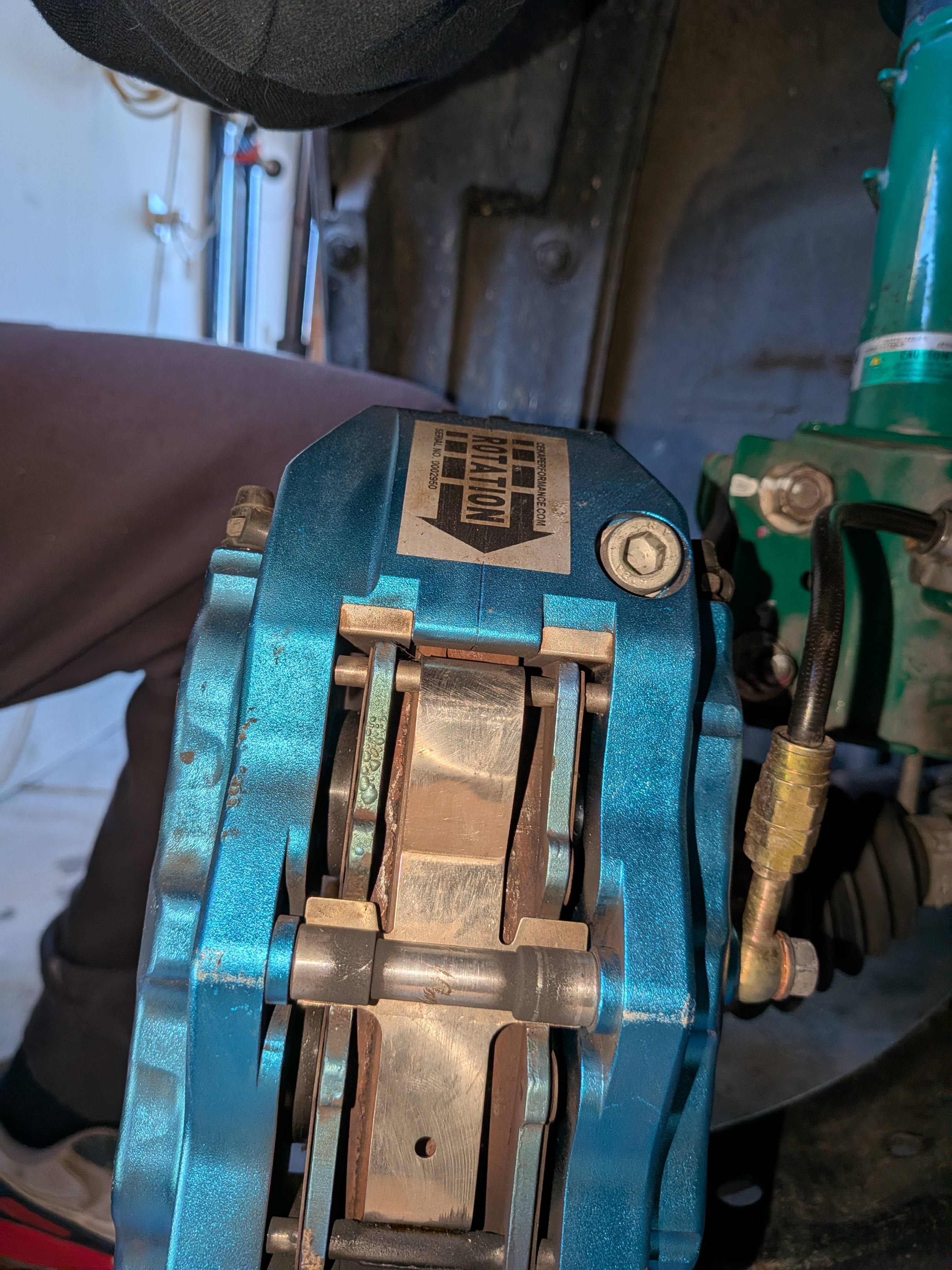
The day was cut short by a rather large fuel leak, I lost about 5L into the engine bay, a miracle there was no fire.

My 3D printed injector rail spacers got hot and went soft, causing the rail to sag and unseat the No. 4 injector (closest to the rail feed). Unlike the original post, I did print them again in ABS however the infill/density was low. I think this was the main factor as the engine bay doesn’t feel like it’s getting hot enough to reach ABS melting point. Thankfully, by the time it had fully let go I was close enough to the pits to kill the car and coast in.

I had to remove the bonnet liner as it was drenched in fuel. It was dripping for fuel for over 10 minutes with the bonnet up. Maybe I should’ve bought a lottery ticket…

Thanks to some fellow Suzuki enthusiast who had some spare round bar, we were able to cut some makeshift spacers down to get me home. It was about 1PM at the time of the fuel disaster and almost 2PM by the time I had fixed it. I elected not to return to the track, opting to leave the car in the sun to let the excess fuel in the engine bay to evaporate.

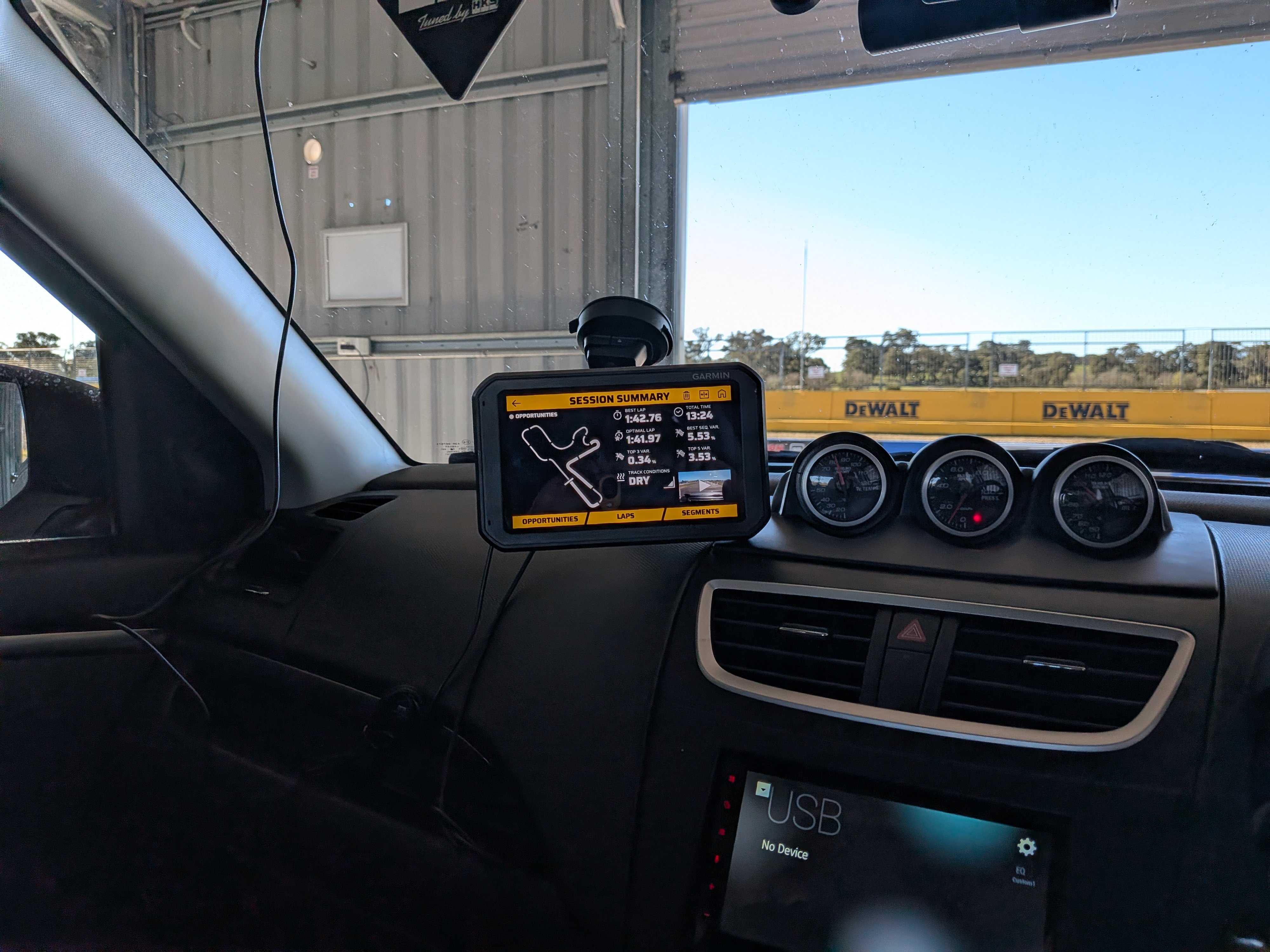
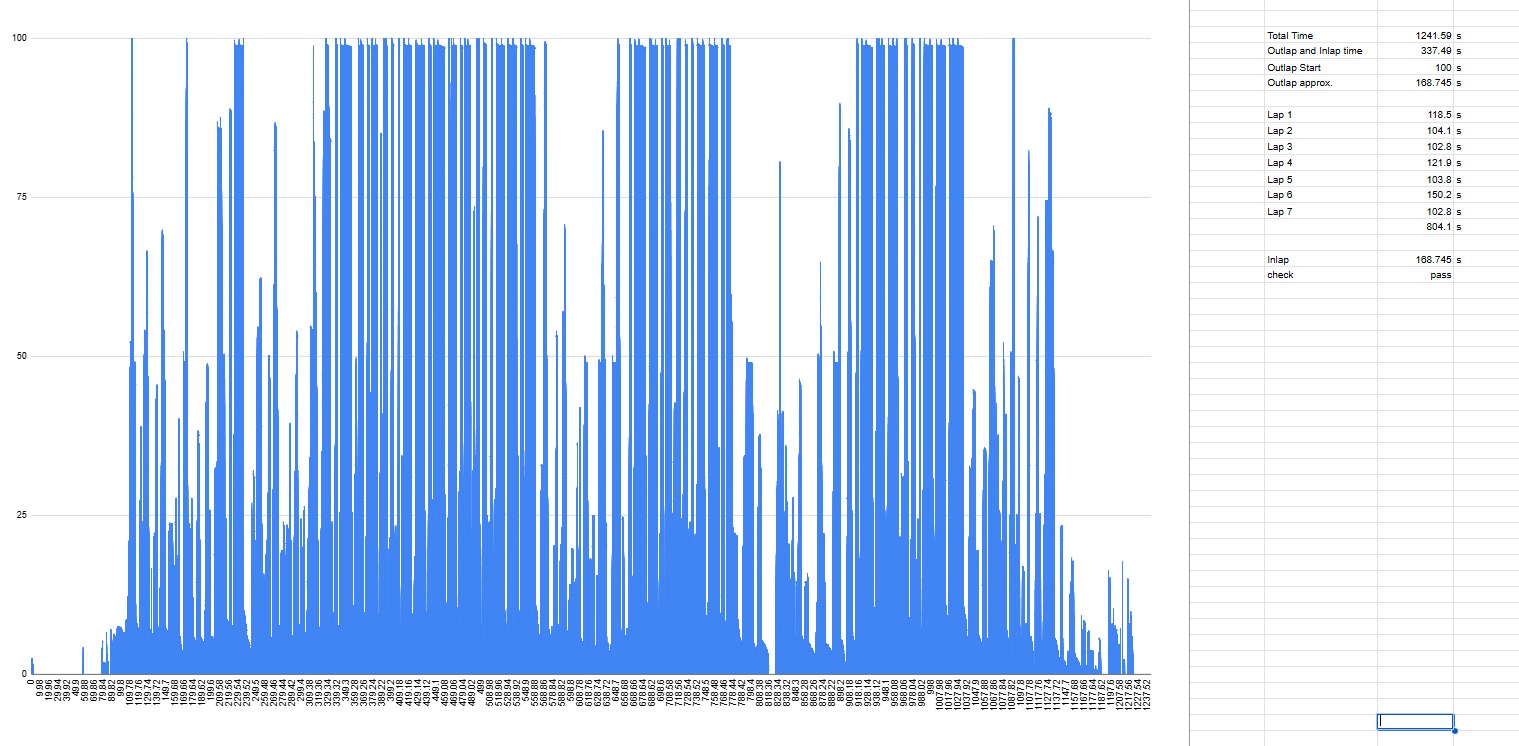
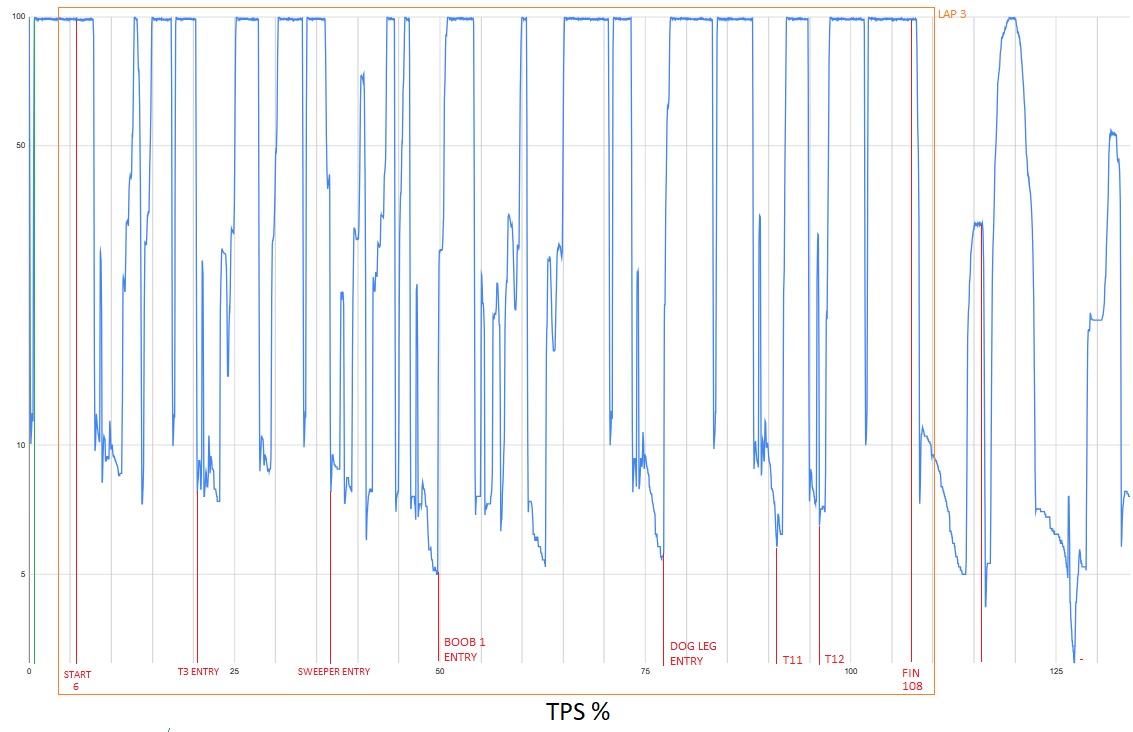
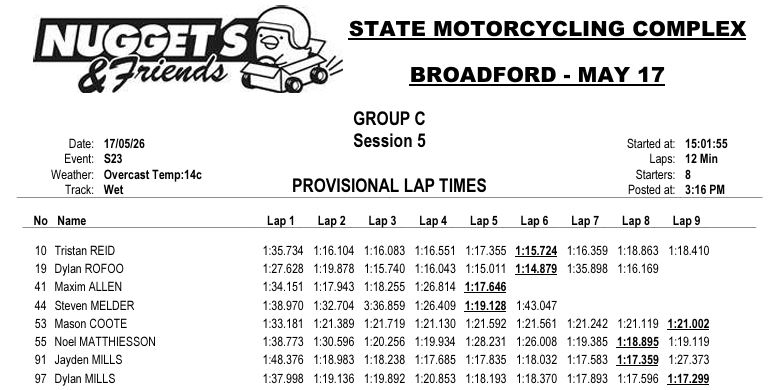
Overall, a successful shakedown. Despite being 0.5s off my NA PB, I was improving by over a second each time I went out and having a brief look at the data a 1:40 should be very achievable… Once I grow some balls and regain some confidence after my crash in the Galant a few years ago.

Best lap of the day (delta to PB [NA]):

Fans

As mentioned in my previous post, my radiator fan did not work after installing the Link (same with A/C). After doing some googling, I suspected the fans could’ve been locked out due to no A/C gas.

Looking at the wiring diagram for the fan setup on an earlier model Swift Sport (ZC31S) I decided this was unlikely. I had the A/C gas reinstated and there was no change. Notably, the A/C compressor requires jumping to trigger.

Reviewing the diagram, I believe there is something internally inside the ECU that is unhappy with the “IGN ON” state. Refusing to trigger (pull down) the outputs to the radiator fan and A/C compressor relays. – refer green “fucked?” circles. I discuss more about it in this post I made on the Link Forum.

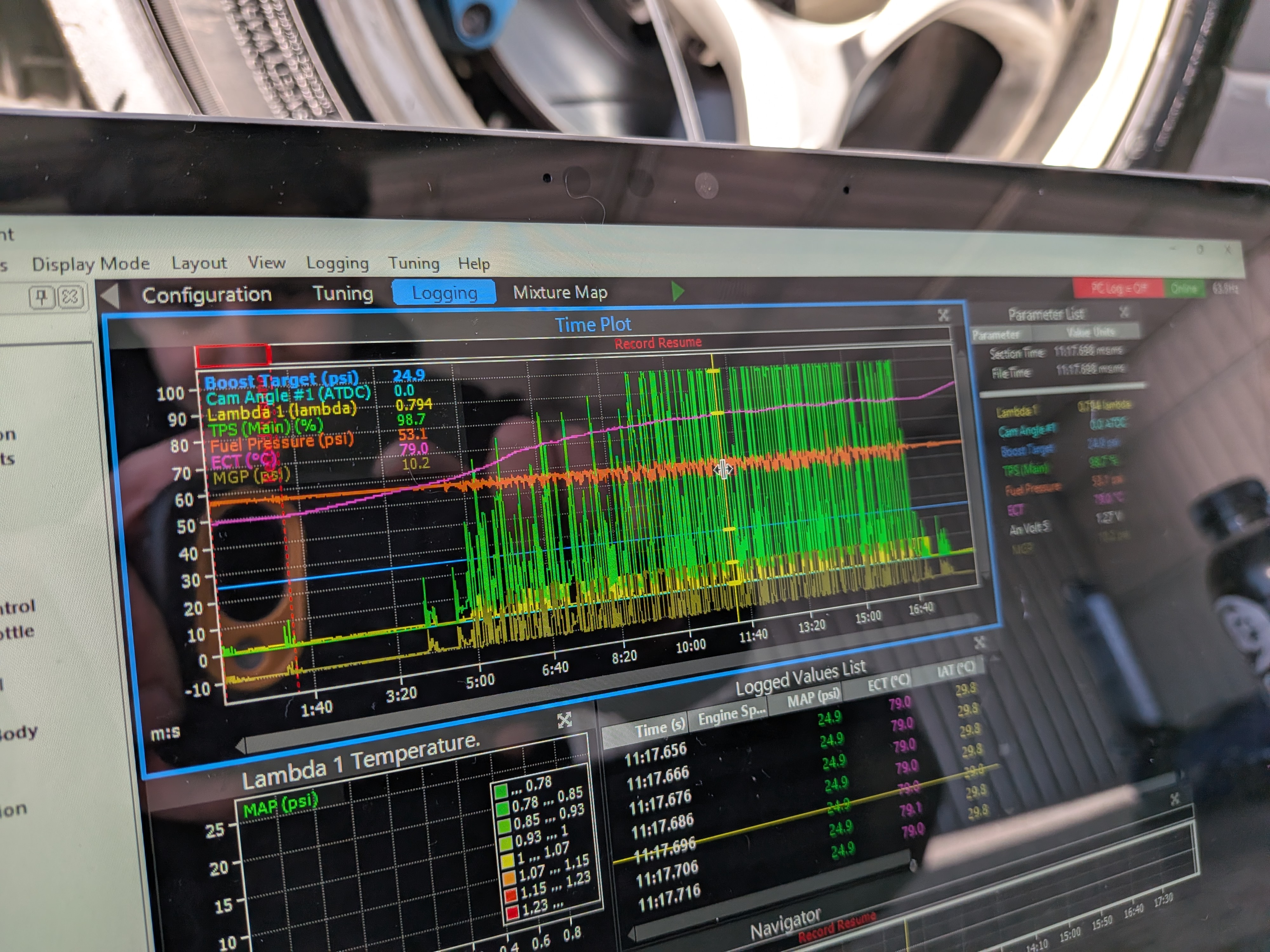
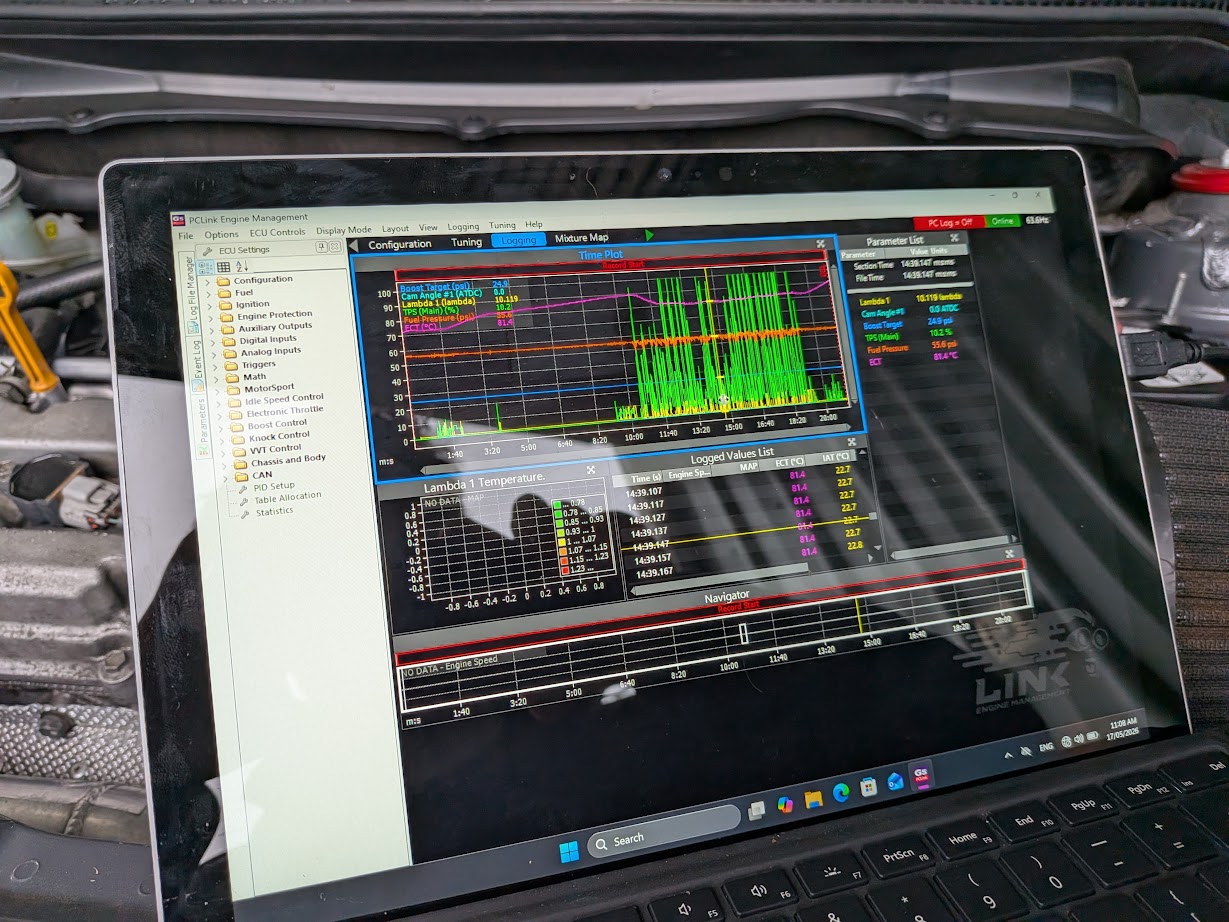
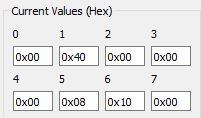
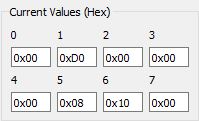
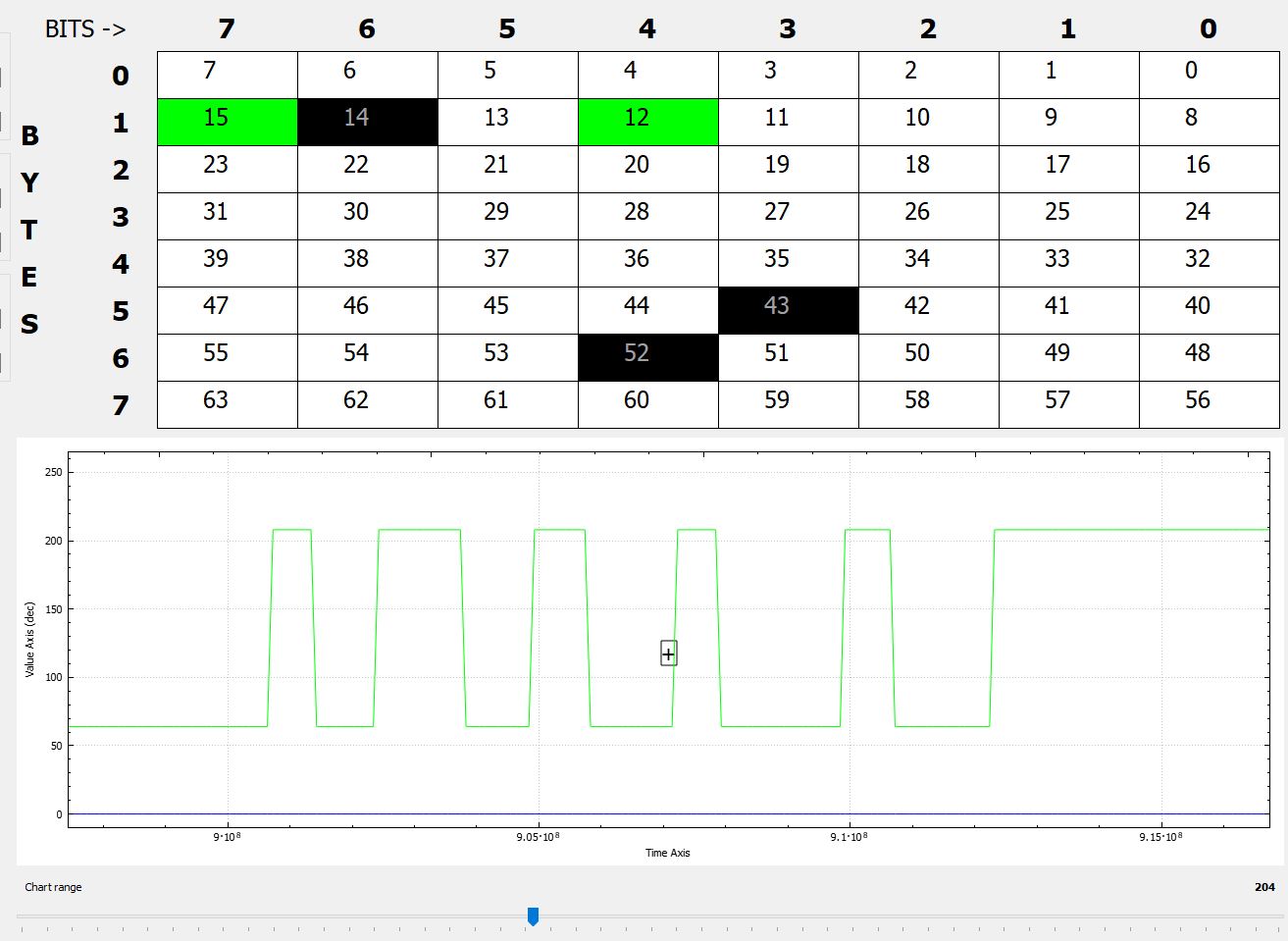
Above image is how I ended up wiring the fans via the Link, it works perfectly! On low speed, at idle the fan was able to drop the temp nicely. As we enter the depths of Summer it will be good to see how high speed goes. My logic for fan control is below. Note, the image of the laptop below doesn’t show current settings.

LOW: Coolant temperature > 93C (3C hysteresis)
HIGH: Coolant temperature > 100C (4C hysteresis)

Unfortunately, I am now out of aux outputs and will require one to get A/C working via the Link (if I choose to do so).

I have a few options for triggering the A/C compressor. The factory ECU appears to trigger the compressor relay output when receiving a CAN message from the press of the A/C button in the car.

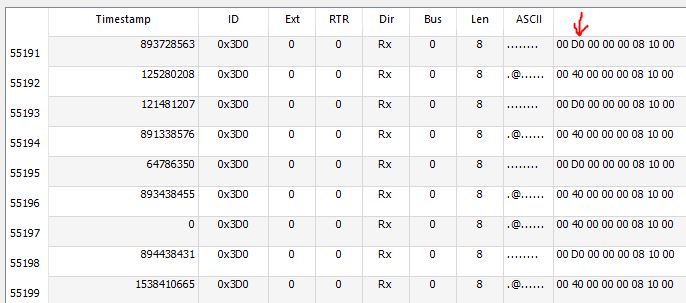
From my research, I believe the car (and most late model Suzuki’s) runs the bus on 500Kbp/s. As I have the CAN lambda installed on 1Mbp/s, I would need to drop the bus to 500 Kbp/s and sniff out the A/C request in order to get the Link to control the compressor output. If I go with this option, I will make the Link fan output be single speed, HIGH (Aux 4) and the LOW speed would become the A/C compressor (Aux 5).

The alternative is run a secondary CAN device, such as the Canny C7 which could control the compressor relay output as a standalone device. This could be preferable as the Link CAN bus would be completely separate to the OEM ECU.

Updated wiring table is below.

Final Tuning

Time to head back to the tuner!

I drew up (by hand) a spacer to allow an additional coolant temperature sensor in-line with the factory one. The boys at work spun it up using some scrap aluminum and it came up great. I cross drilled it at home after confirming orientation with a copper crush washer.

Unfortunately, I still cannot get VVT to work. I have confirmed oil comes from the oil pump, up to the solenoid and that the solenoid moves when using the test functions on the Link. Oil also appears to make it to the cam gear however the cam angle (as logged by the Link) doesn’t change. My final test is to connect the solenoid back to the factory ECU and log cam angle, this will rule out anything funky going on with the Link.

Tuning went well. The car made 120kW on 9ish psi, no VVT. The car drives great and I am slowly learning the clutch. It also sounds awesome and has a cute little dose, absolutely stoked with how everything went and am keen to take it back on track. VVT is a problem for another day,

My thermofans don’t work, this will need to be fixed now that it’s warming up. I suspect I have damaged the wiring somewhere and the voltage isn’t getting pulled low enough to trigger the fans. They’re still controlled by the factory ECU and factory ECU appears to be reading temperature fine (verified by ODB2 scanner). More troubleshooting required…

I am writing this from Japan where I have had some great experiences talking to fellow swift enthusiasts at track day(s) and notably, Monster Sport Sendai. The clerk at Monster Sport Sendai also had a sporty ZC32S with a TM Square tuned ECU! I look forward to returning home and getting the car on a track!

Tuning & VVT Problems

Off we went, back to the tuner. I had resolved the list in my previous post (or so I had thought) and was ready for the big day.

Things went fairly well, unfortunately we couldn’t get VVT to work and I had plumbed the boost control solenoid vacuum lines arse about. On wastegate spring pressure (4.3psi – exactly per HKS documenation) we made 103 kW. The car drives well despite the temperature sensor being after the thermostat. This is one of the things we will rectify when I take the car back for proper boost tuning.

One point worth noting is we needed to drill a 3mm hole in the butterfly valve on the throttle body to get the car to idle smoothly while cold. This was a suggestion from the tuner, and it worked perfectly. Without the hole the revs would bounce between 300RPM ~ 1000RPM, sometimes stalling.

VVT is proving to be quite a problem. We can hear the valve move when we give it the signal via the Link however, we see no change in cam angle. The car also has no change in operation.

Pulling the valve cover off, I thought I had found the issue. Silly me had forgot two of the bolts supplying oil pressure to the camshaft and sprocket. I found the two bolts and reinstated them but alas, the problem persisted.

I found a post on Facebook in a Haltech tuning page (you will need to join to view) with someone who was having very similar problems. They advised the issue was due to the sprocket not being bolted “square” to the camshaft, causing the phaser to bind. After some troubleshooting, this was not the case for me, I could unlock the pin and rotate the cam independently of the sprocket with about 40psi of air pressure with ease. This means I either have an oil pressure or supply issue to the cam journals, or the solenoid is not actually moving the spool (despite us hearing something).

For now, I will take the car back for boost control and cold start tuning with my relocated temp sensor and correctly plumbed vacuum lines. Oil pressure is great and there are no alarming sounds, so I suspect the solenoid is just FUBAR. VVT is an issue for another day.

I created a poll on Instagram for power figures, with most people guessing between 120-150kW. Expect around 130kW based on the 103kW at gate pressure.

Finally, I installed my beautiful Monster Sport A-pillar gauge pod (and fancy radiator cap). I had to splice the power and illumination wire on the Defi to get it to light up constantly (as it’s a smoked face). The standard Defi gauge worked via the Suzuki Sport Link Meter as it’s essentially just an old “BF-1” style Defi controller. It took a bit of research to figure that out and I was stoked when it just worked!

I wasn’t very impressed with the fitment of the A-pillar pod, the finish is nice, but it required a fair bit of modification in order for it to clip in and even then, it has some gaps around the factory trim.

Fabrication & Fuel Pressure Woes

I managed to get the car to the tuner for some fab work and the tune prior to a quick 2-week trip offshore. As I arrived, he went through all the wiring and everything looked good, a sigh of relief from myself.

Unfortunately, it seems my modifications to the fuel pump housing failed and we could only build about 3psi of fuel pressure before dropping to zero. I suspect the fuel pump nipple is not sealing in the housing, having fallen due to a lack of support or was never seated properly in the first place.

We did manage to get the car running off brake cleaner – win.

Whilst offshore I ordered a new housing and bought the Denso 265 LPH pump I mentioned in my previous post. The pump is indeed identical to the factory one, going into the new housing beautifully.

The fabrication works looks absolutely awesome. I have a small to-do list before heading back to the tuner in the next week or so.

As you can see, some of the items are already complete, including a catch can.

Coolers Mounted, Crank & Prime.

Short post today.

I tidied up the brackets for the intercooler and oil cooler, rounded the edges etc. Location is looking great, I managed to fluke centralizing the intercooler. I had forgot the factory lower grill is partially blanked on the driver’s side.

With everything mounted, I “put the key in” for the first time in at least 6 months. I did this twice hearing the pump prime both times and no leaks at the rail!

I also cranked the car a few times too, no noises and no leaks. All that’s left is putting the CVs back in, filling the box with oil and delivering it to the tuner!

Broken CSCs and Engine IN!

Following on from my previous post, I got the clutch, flywheel, motor and box in only to realize the concentric slave cylinder was leaking. Now I’m not sure if this was my doing or it was dead out of the box but I’m leaning towards the latter. Taking it apart I couldn’t see any issues, so I think something internal had failed. It was also marketed as an “upgraded’ CSC however it was almost identical to the new one I got. Thankfully, the CSC came in my clutch kit as they are ridiculously expensive alone. I also got an absolute bargain on the kit as part of a sale.

With the CSC problem, I had to delay my dyno day and I wasn’t very impressed with the support from the OEM.

We must move forward though. After a brief break from the frustration, work kicking my ass and waiting on the new CSC I eventually got it all back in with the clutch working.

I also tidied up the wiring, extended some sensors etc. It’s looking good.

Today I dummy fit the oil cooler & intercooler with associated lines. I will get Rob (the tuner) to redo most the piping, but the overall layout appears to work. The dump pipe is going to very tight – he has his work cut out for him!

Not much to do now, need to do fluids, check for leaks and that’s about it. Touch wood…

Engine On The Ground

After mocking up everything I wasn’t entirely happy with the oil filter location. I think with the oil cooler installed, swapping the filter would be a very annoying task. I grabbed a right-angle oil filter adapter/housing common to the base models (without the OEM cooler). The access is now much better, and the oil filter is away from the heat source.

As I didn’t have the o-ring (which commonly fails), I filled the groove with sealant and used the “revised” gasket. It’s very tight to the drain line, but once again – clearance is clearance.

I spent a bit of time making a heat shield too. The embossed aluminum is fairly easy to work with. I will get the cuts I made to fold the outer edges tacked up as currently they are a bit flimsy. Once the dump pipe is made, I may attach a second piece per the pictures below. The injector loom was also a bit loose, so I knocked up a bracket for a p-clamp to hold it.

In more exciting news, the engine is now off the stand and on a dolly. Ready to chuck the clutch and flywheel on! Tune day, Aug 12, is coming up awfully quickly.

Loom Fit & Variable Intake Runners

With the wiring (mostly) complete I went ahead and married up the loom to the engine. I am fairly happy with how everything sits. Unfortunately, I lost the factory tie down points for the injector harness due to the adapters I’m using but I can make something work.

I also wired in 2 relays with will act as reversing relays to control the variable intake runners. I toyed with the idea of just locking them in the long position as they can’t be deleted (easily) with this plastic intake manifold – which I’m praying holds up OK to the boost level I’m running. If I go for a bigger turbo down the line I will definitely need to source a ZC31S intake manifold (cast alloy).

The tuner, Rob, thinks that there will be good benefits in having the link control the runners, especially down low. I am once again thanking KAPOW who made a post on the Link forums detailing how to control it. There’s even a great video documenting the logic from Link staff! I have wired it pretty much exactly per the post – it came up pretty well.

Interestingly, the range of motion is very small, like 15-20 degrees.

I ended up re-routing the water line nearest to the dump pipe following advice from other turbo swift owners. Now both the feed and return are on the cold side. I am yet to nail down the feed point but I have some ideas, the tricky part will be avoiding chafing. I also added some heat wrap to the AC lines.

With that, there really isn’t too much more to do other than get the clutch on, bolt the gearbox up and slap the assembly in. I got the flywheel machined last week and fit the concentric slave – all looks good! I will also fit the factory right angle oil filter housing as I realized my current position will make the oil filter very hard to change, I would need to remove the oil cooler lines every time I change the filter…

Wiring Part 2

Finally… The wiring is done!

My crimping skills continued to grow, as did the cramps in my hands.

After all was said and done, I checked each end where I had spliced into the factory wiring with a multimeter. I found two wires, the TPS signal (GRN) and Ignition 3 (BRN) which I had incorrectly tapped in to. This was easily fixed and happened due to there being multiple GRN and BRN coloured wires.

I also left plenty of extra cabling left for the tuner. Where he needs to weld bungs and install sensors – CAN Lambda and Intake Air Temperature (IAT).

I am quite pleased with the results and have begun to tape everything up. You can see in the images below that I have also crimped on the sensor ends, and replaced the Delphi 3-pin connector mentioned in my last post.

I also finally got some 3/4 UNF jam nuts to tighten down my oil filter stud. Local bolt shop even gave them to me free, bless them. Oil filter sandwich plate is now in, with various fittings tightened with a bit of teflon tape.