CANBUS device & A Pajero

In order to fix the air conditioning, I have purchased a DIY CANBUS reader/write that interfaces via the OBD2 port. The open-source 3D printed enclosure is nifty and works well. My printer is getting old, and the filament has been been outside for a long time, so there was plenty of stringing. Regardless, came up well.

The plan is plug it in to a factory ZC32S and try get the message(s) that tell the factory ECU the car is in a started state. If this can be achieved, the AC should just work via the factory controls.

If this doesn’t work, I will need to sniff the AC button press and get the link to send it based on an input [TBC]. I will then need to think about a control strategy as using this method I won’t have the references the factory ECU would (gas pressure, temp etc.). I am thinking of just cycling the compressor, playing with cycle times so it stays cold.

As discussed in my fan post, I am out of outputs, therefore I will need to either run the fans on high only and steal the low output for AC or buy some type of expander for the Link, TBC.

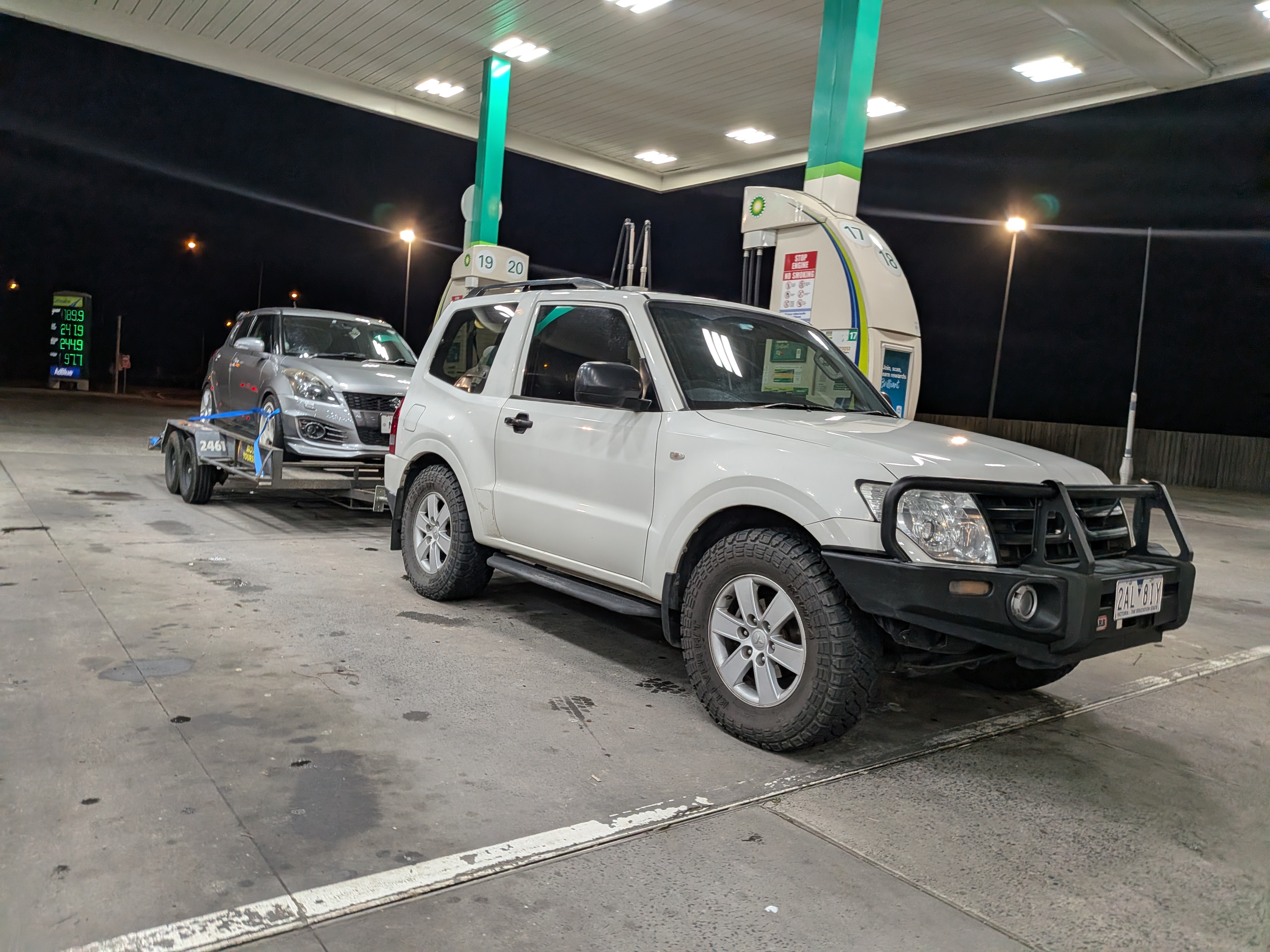
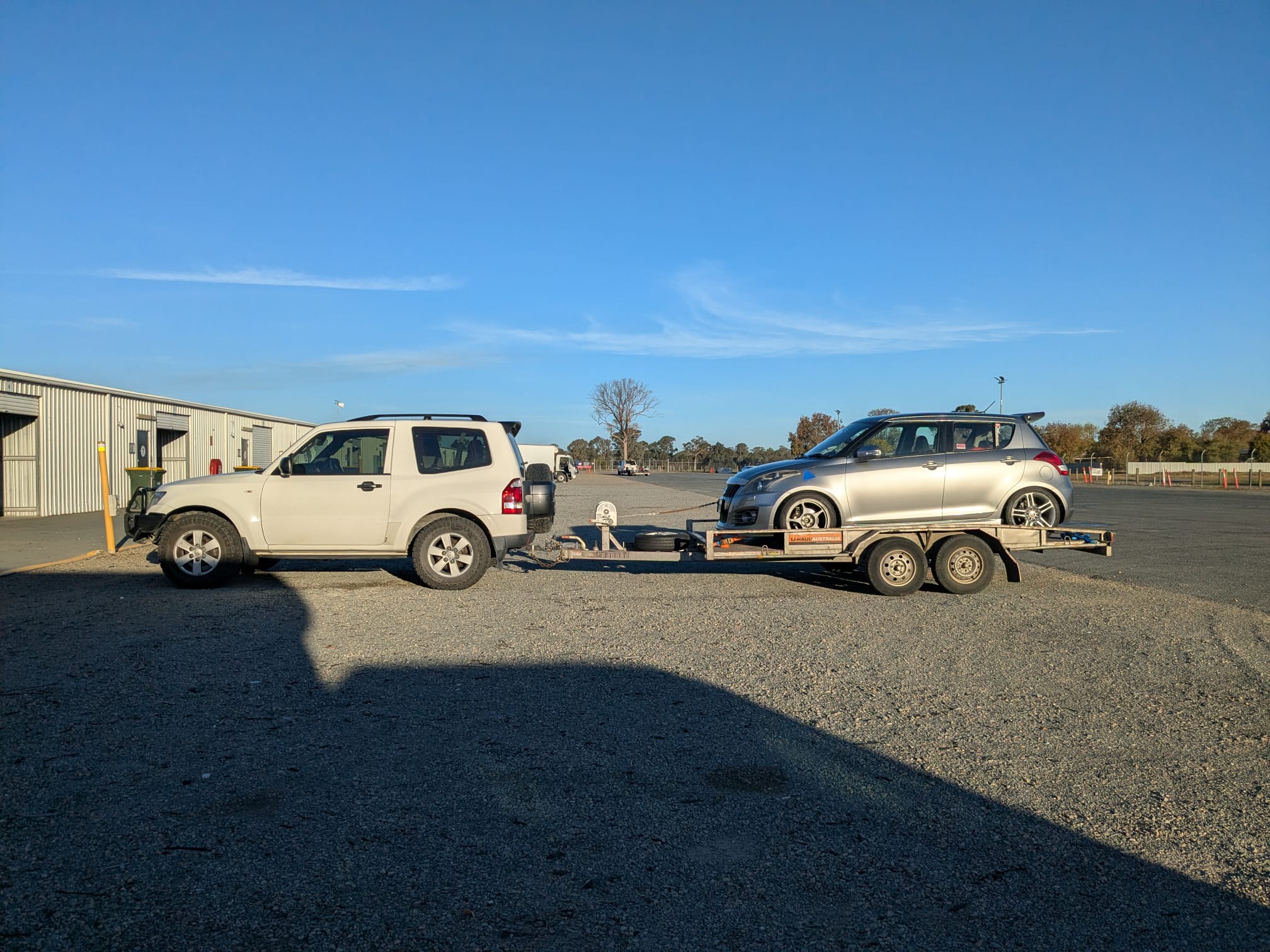
In more exciting news, I purchased a Pajero! 2007, short wheelbase with rear diff lock optioned. I drove about 4ish hours East (Orbost), to pick it up after buying it sight unseen. I looked at 2 others more local to me and neither of them were what I wanted. The car is very clean, and I am happy with the purchase. It has a “farm” smell, but the Bissell and some little trees should sort that out.

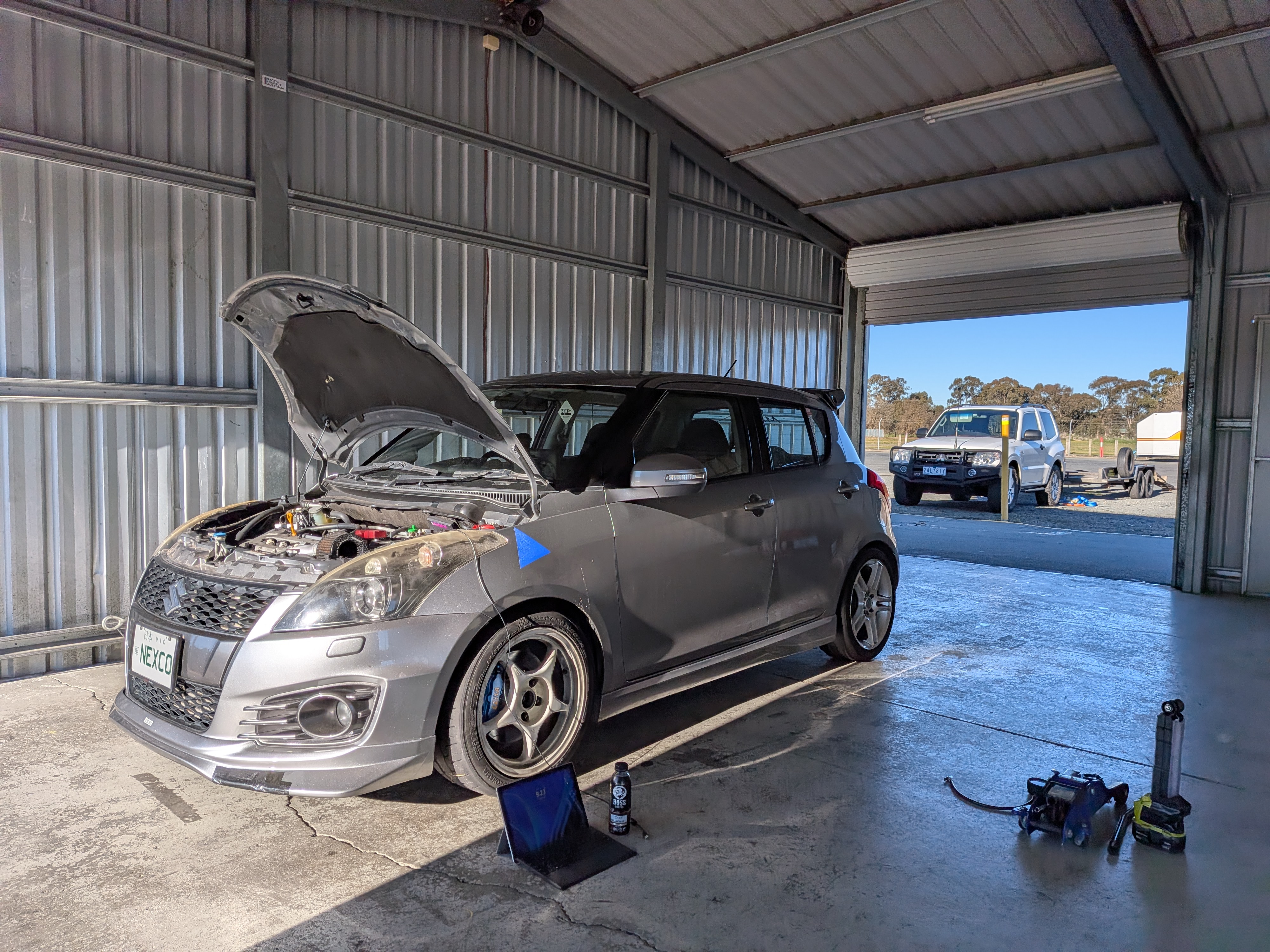
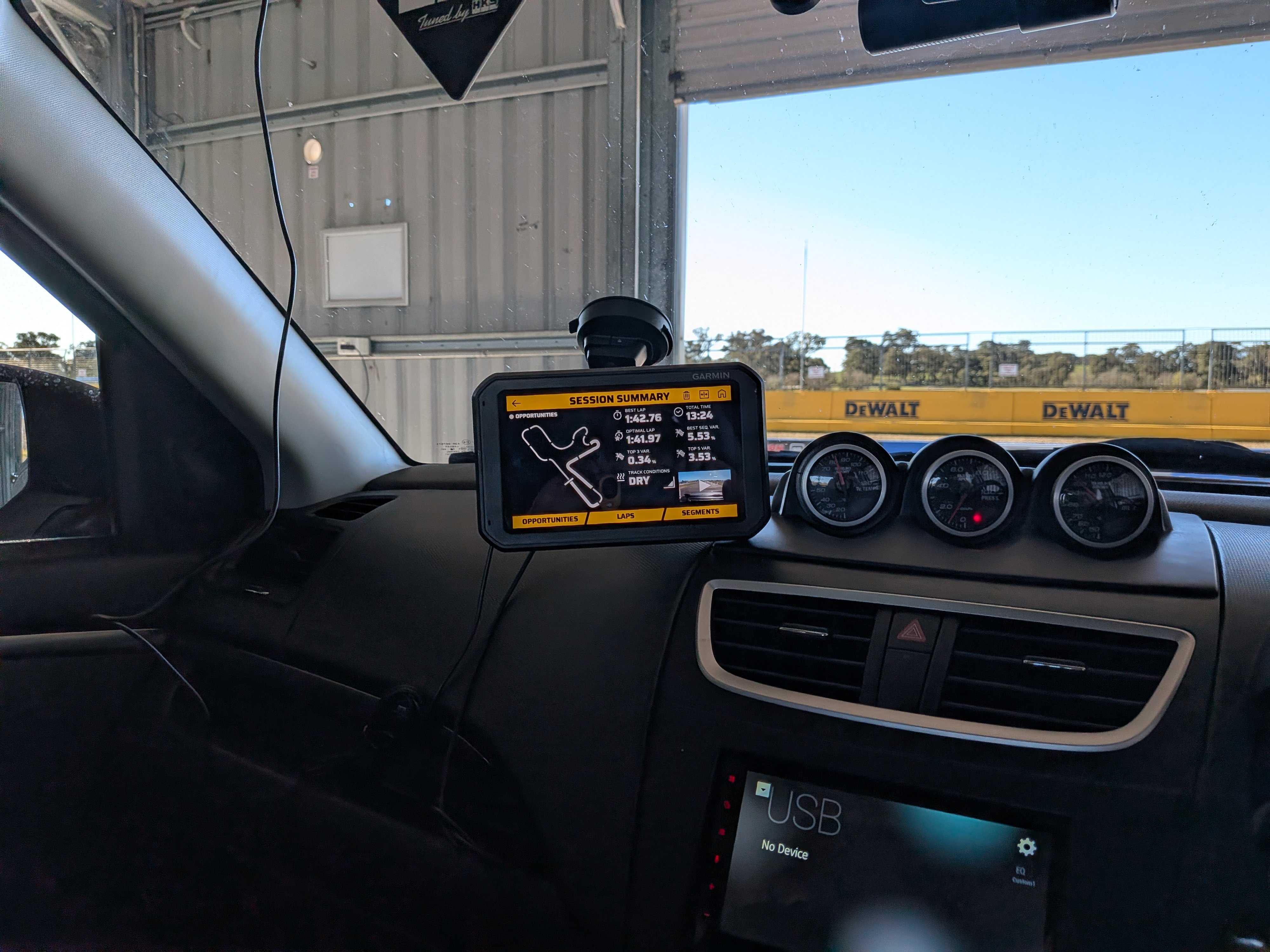
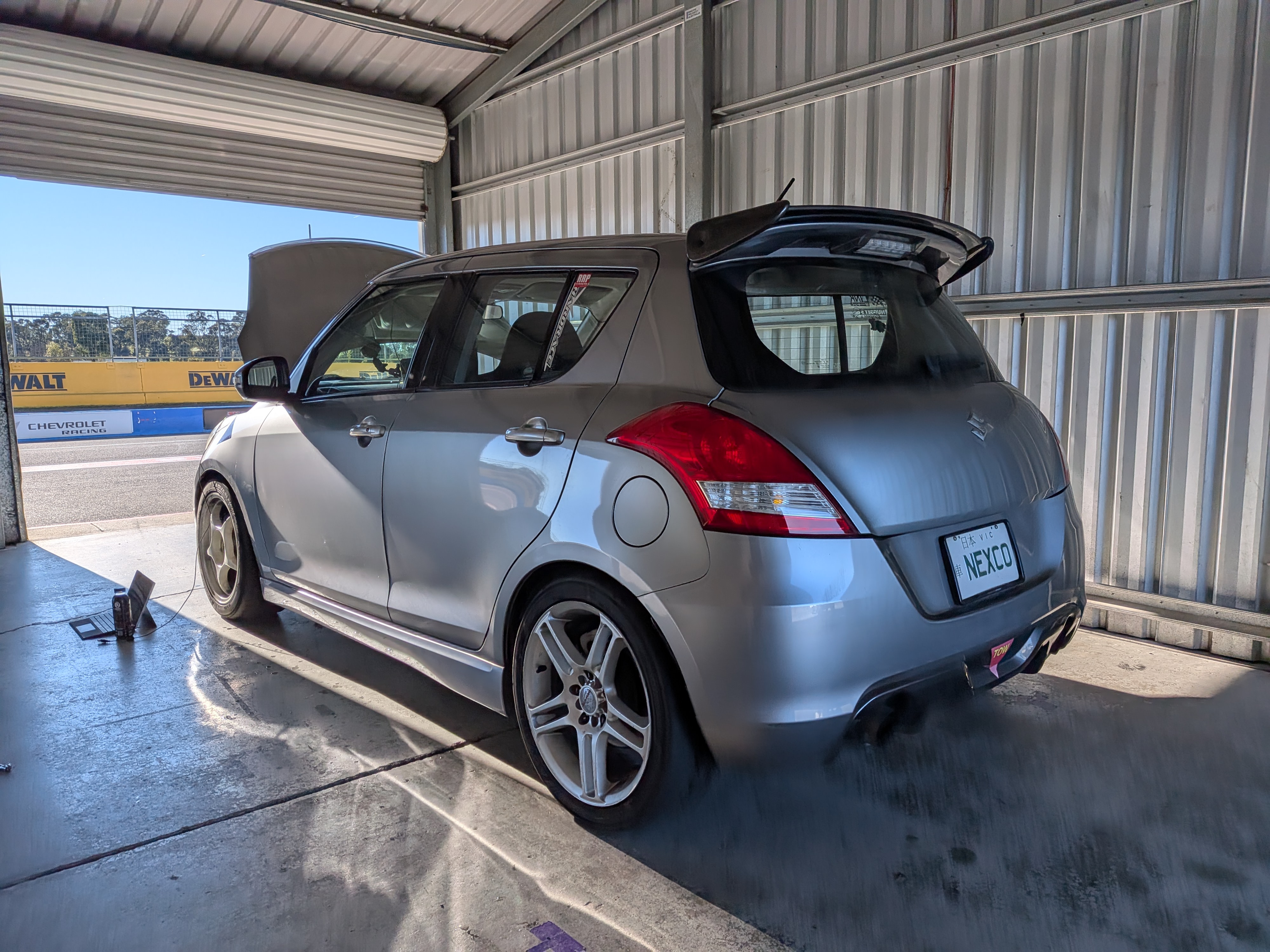
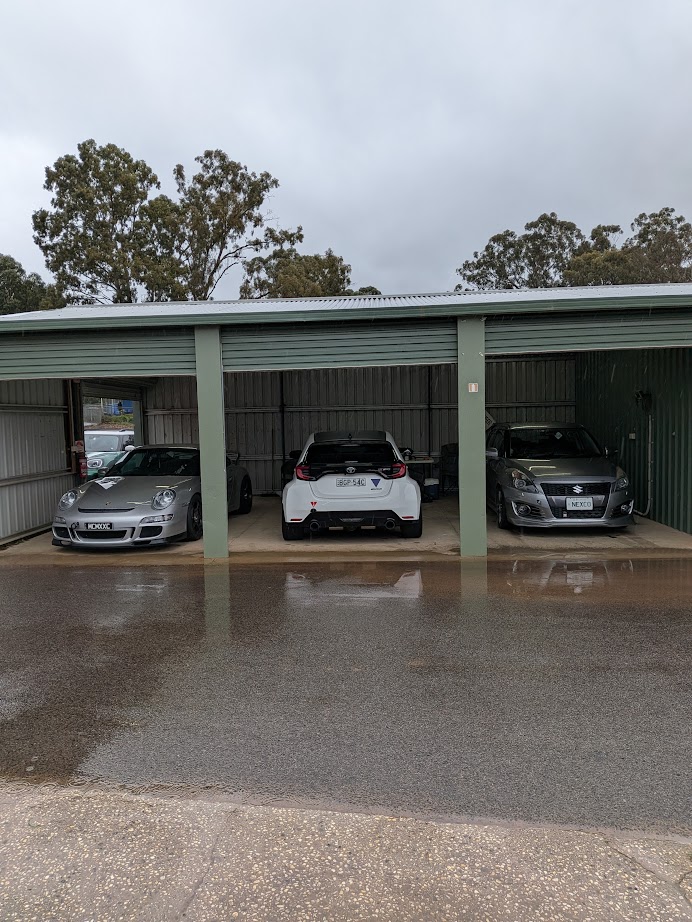
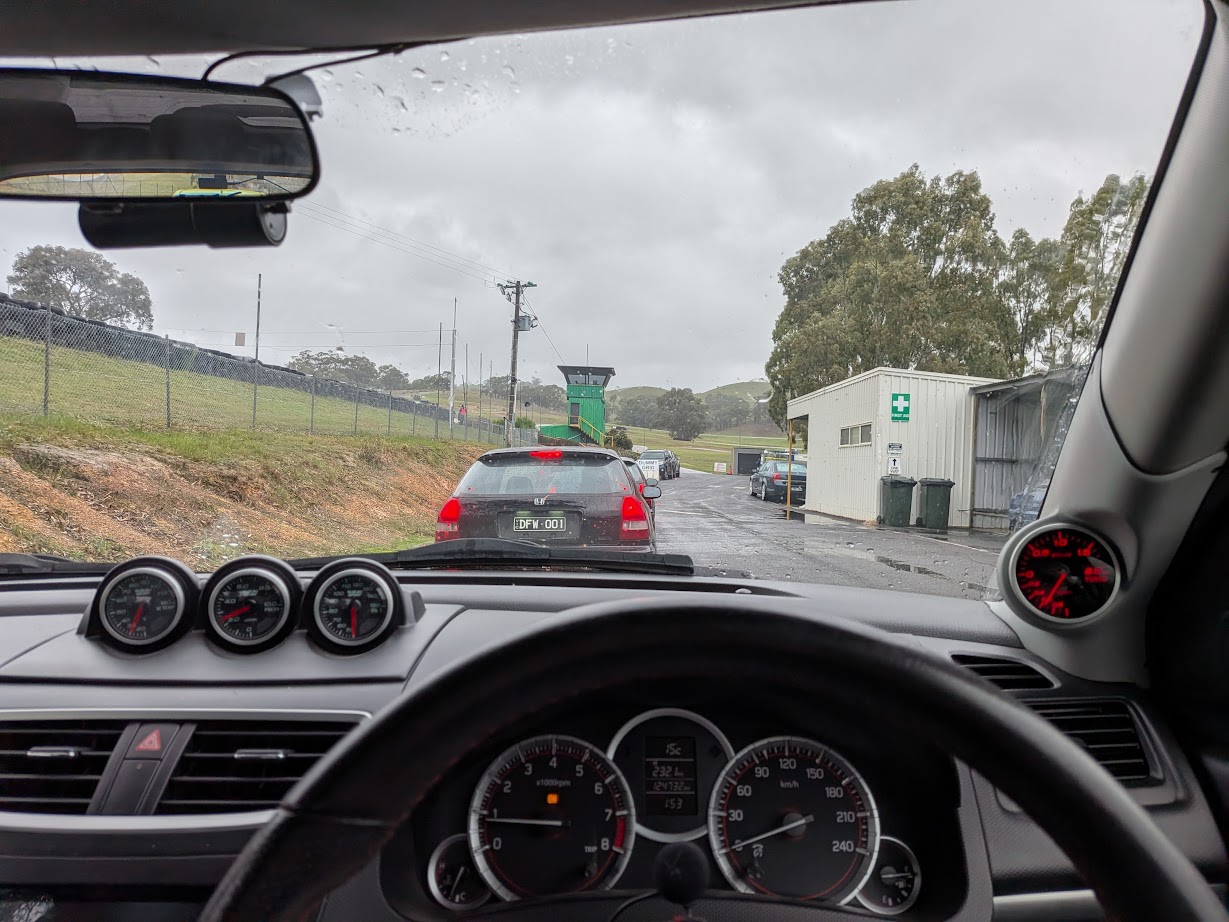
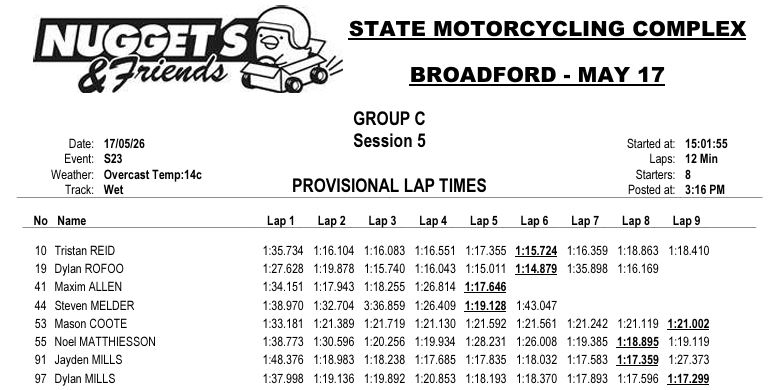
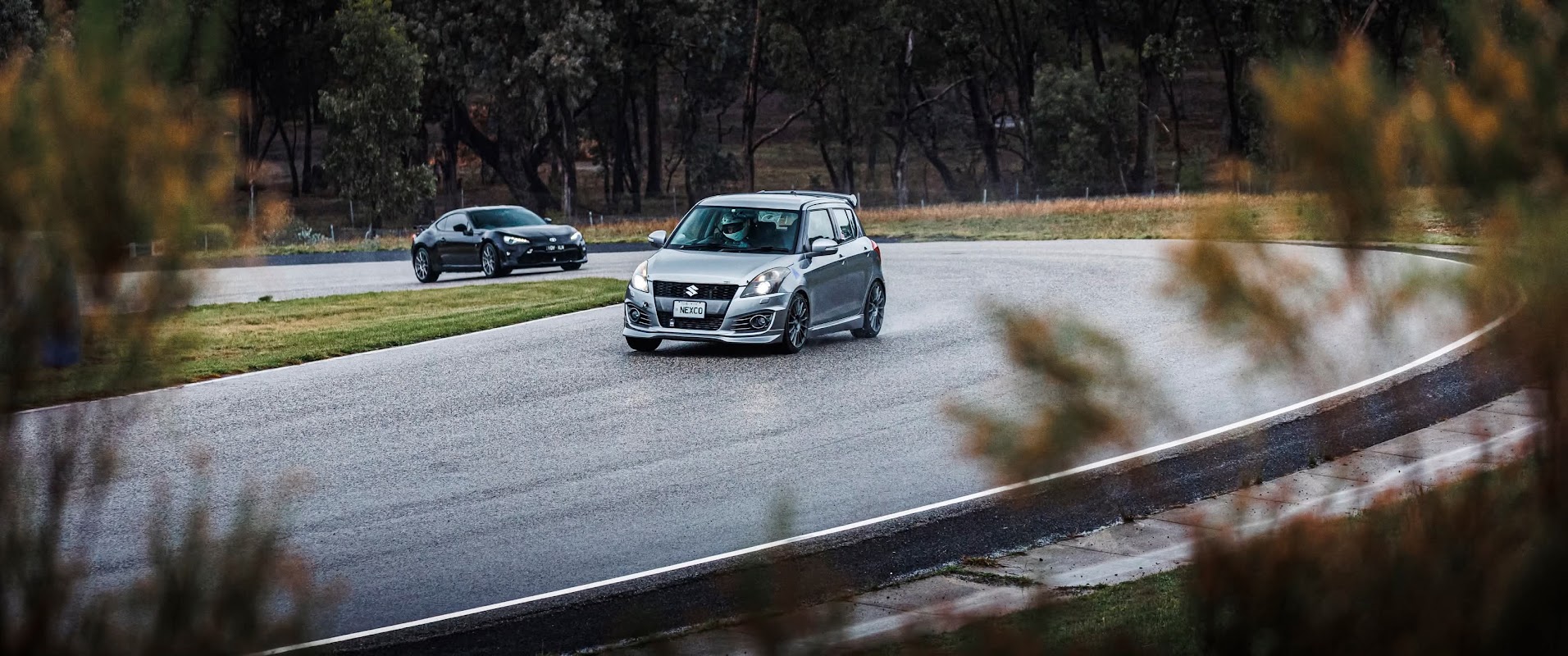
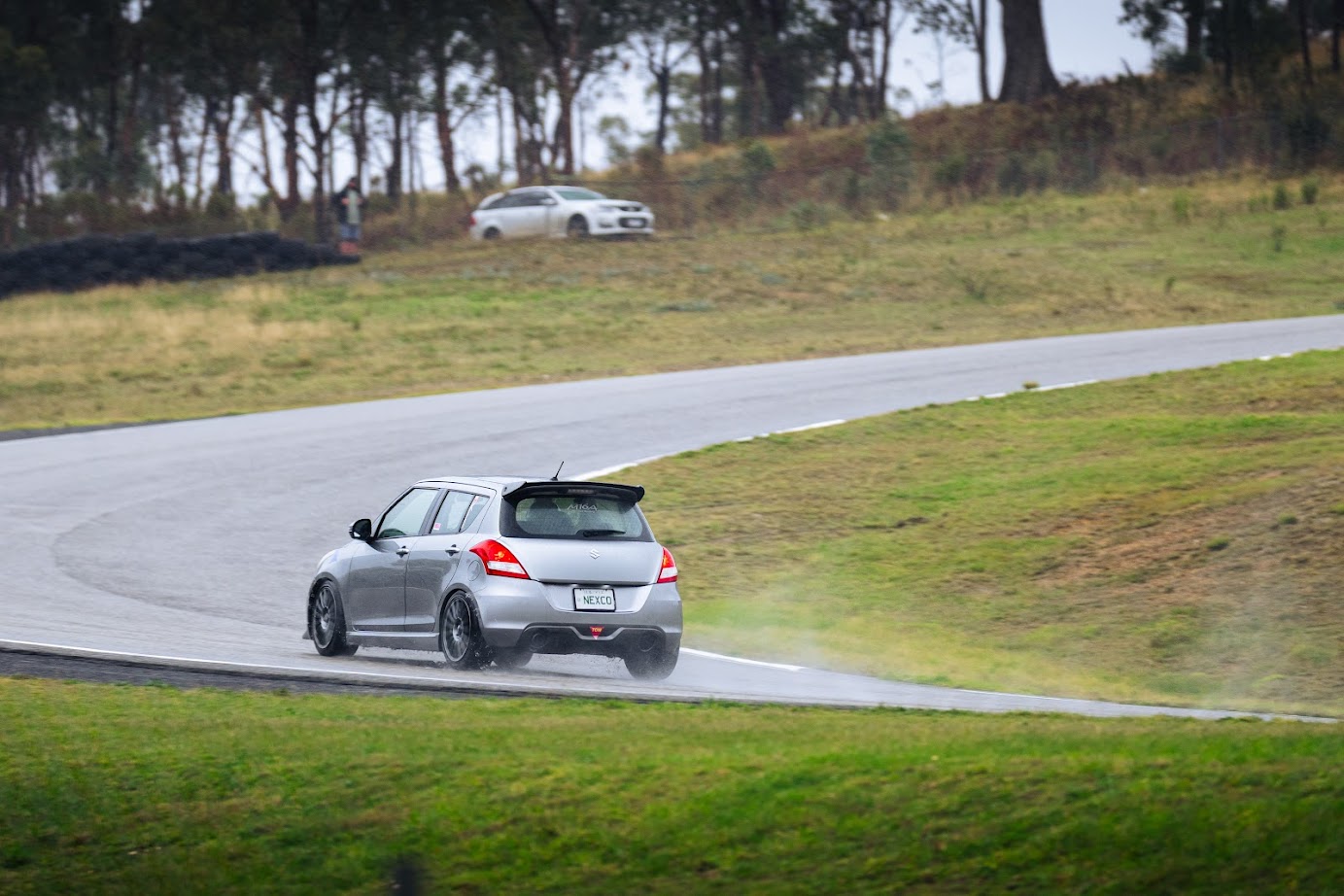
The car will be doing daily, towing and trips away duties. After driving the Swift up to Winton a few weeks ago, I would rather tow the car now to eliminate risk and have a more comfortable ride to and from the track. Speaking of, I have a bit of deja vu!

Fans

As mentioned in my previous post, my radiator fan did not work after installing the Link (same with A/C). After doing some googling, I suspected the fans could’ve been locked out due to no A/C gas.

Looking at the wiring diagram for the fan setup on an earlier model Swift Sport (ZC31S) I decided this was unlikely. I had the A/C gas reinstated and there was no change. Notably, the A/C compressor requires jumping to trigger.

Reviewing the diagram, I believe there is something internally inside the ECU that is unhappy with the “IGN ON” state. Refusing to trigger (pull down) the outputs to the radiator fan and A/C compressor relays. – refer green “fucked?” circles. I discuss more about it in this post I made on the Link Forum.

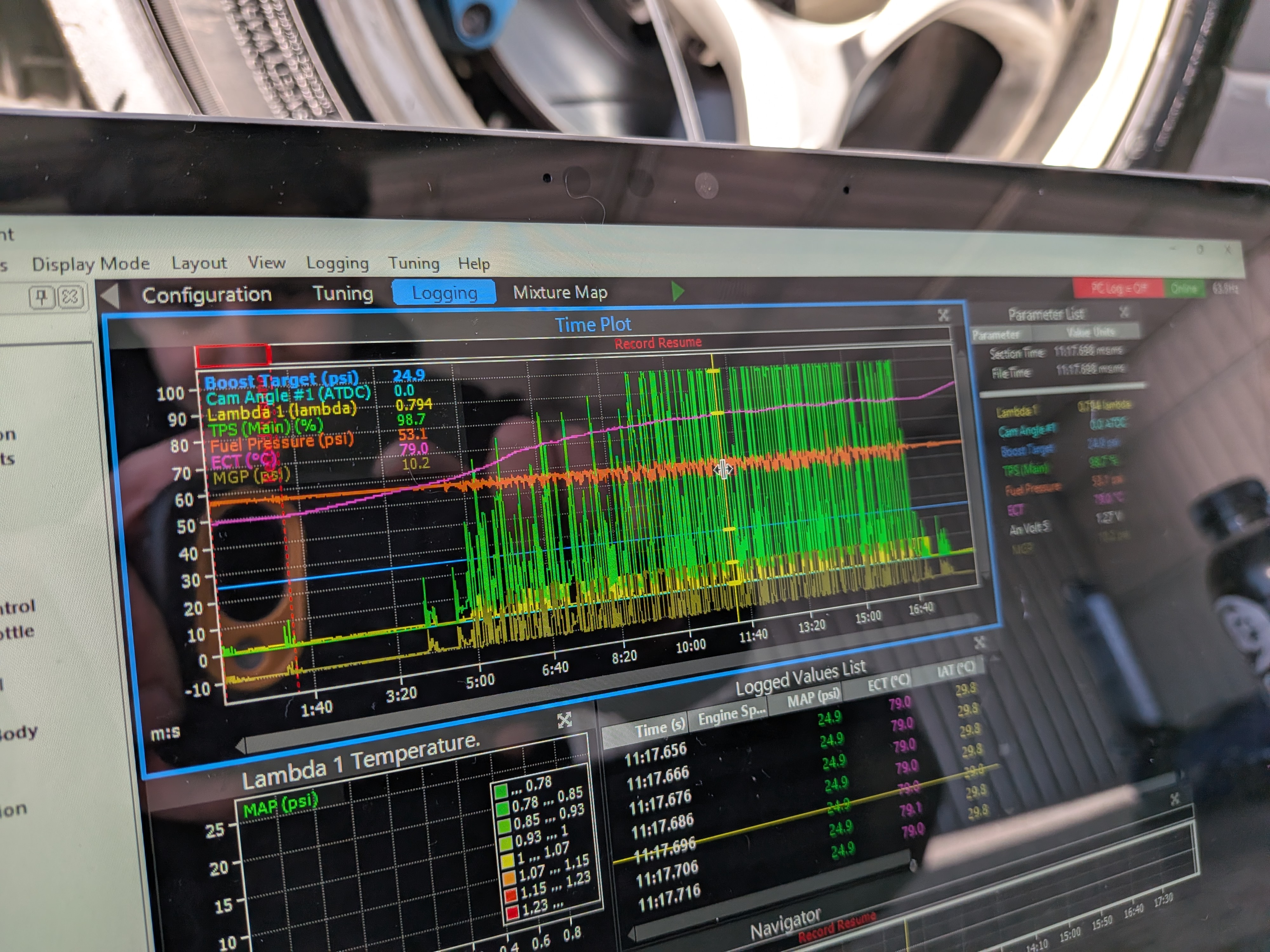
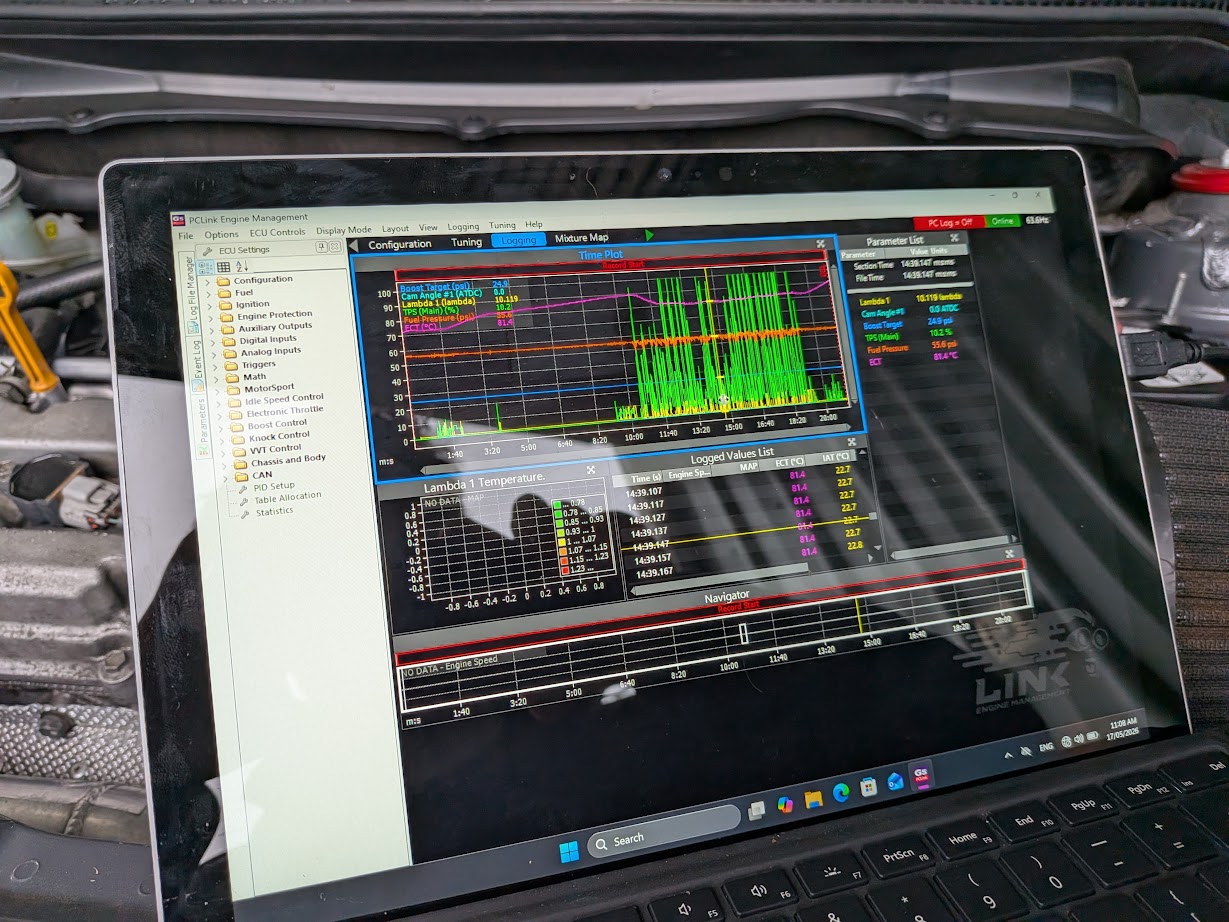
Above image is how I ended up wiring the fans via the Link, it works perfectly! On low speed, at idle the fan was able to drop the temp nicely. As we enter the depths of Summer it will be good to see how high speed goes. My logic for fan control is below. Note, the image of the laptop below doesn’t show current settings.

LOW: Coolant temperature > 93C (3C hysteresis)
HIGH: Coolant temperature > 100C (4C hysteresis)

Unfortunately, I am now out of aux outputs and will require one to get A/C working via the Link (if I choose to do so).

I have a few options for triggering the A/C compressor. The factory ECU appears to trigger the compressor relay output when receiving a CAN message from the press of the A/C button in the car.

From my research, I believe the car (and most late model Suzuki’s) runs the bus on 500Kbp/s. As I have the CAN lambda installed on 1Mbp/s, I would need to drop the bus to 500 Kbp/s and sniff out the A/C request in order to get the Link to control the compressor output. If I go with this option, I will make the Link fan output be single speed, HIGH (Aux 4) and the LOW speed would become the A/C compressor (Aux 5).

The alternative is run a secondary CAN device, such as the Canny C7 which could control the compressor relay output as a standalone device. This could be preferable as the Link CAN bus would be completely separate to the OEM ECU.

Updated wiring table is below.

Final Tuning

Time to head back to the tuner!

I drew up (by hand) a spacer to allow an additional coolant temperature sensor in-line with the factory one. The boys at work spun it up using some scrap aluminum and it came up great. I cross drilled it at home after confirming orientation with a copper crush washer.

Unfortunately, I still cannot get VVT to work. I have confirmed oil comes from the oil pump, up to the solenoid and that the solenoid moves when using the test functions on the Link. Oil also appears to make it to the cam gear however the cam angle (as logged by the Link) doesn’t change. My final test is to connect the solenoid back to the factory ECU and log cam angle, this will rule out anything funky going on with the Link.

Tuning went well. The car made 120kW on 9ish psi, no VVT. The car drives great and I am slowly learning the clutch. It also sounds awesome and has a cute little dose, absolutely stoked with how everything went and am keen to take it back on track. VVT is a problem for another day,

My thermofans don’t work, this will need to be fixed now that it’s warming up. I suspect I have damaged the wiring somewhere and the voltage isn’t getting pulled low enough to trigger the fans. They’re still controlled by the factory ECU and factory ECU appears to be reading temperature fine (verified by ODB2 scanner). More troubleshooting required…

I am writing this from Japan where I have had some great experiences talking to fellow swift enthusiasts at track day(s) and notably, Monster Sport Sendai. The clerk at Monster Sport Sendai also had a sporty ZC32S with a TM Square tuned ECU! I look forward to returning home and getting the car on a track!

Wiring Part 2

Finally… The wiring is done!

My crimping skills continued to grow, as did the cramps in my hands.

After all was said and done, I checked each end where I had spliced into the factory wiring with a multimeter. I found two wires, the TPS signal (GRN) and Ignition 3 (BRN) which I had incorrectly tapped in to. This was easily fixed and happened due to there being multiple GRN and BRN coloured wires.

I also left plenty of extra cabling left for the tuner. Where he needs to weld bungs and install sensors – CAN Lambda and Intake Air Temperature (IAT).

I am quite pleased with the results and have begun to tape everything up. You can see in the images below that I have also crimped on the sensor ends, and replaced the Delphi 3-pin connector mentioned in my last post.

I also finally got some 3/4 UNF jam nuts to tighten down my oil filter stud. Local bolt shop even gave them to me free, bless them. Oil filter sandwich plate is now in, with various fittings tightened with a bit of teflon tape.

Fuel Pump & Engine Sealed

Good progress recently. I had a bung welded in the sump just above max oil line by one of the guys at work. The fitting was a little worse for wear after welding but I think it should seal fine. I had to shorten my drain line a little, which I may have overcooked it as it was a bit of a pain to tighten but I think it will be fine.

I also installed the Walbro 255 which was a lot more difficult than expected due to the pump being slightly wider and a lot longer than the OEM pump. I made some modifications to the housing and got it to fit but it’s not the prettiest solution. In hindsight I should’ve just bought a Denso equivalent which would’ve dropped straight in with very similar specs to the Walbro.

I used the sanding wheel on a dremel to remove a small amount of material evenly from the inside of the housing. Then I cut various tabs and screwed in some stainless screws at the 3 factory tab locations to hold the pump up, allowing for the extra height and giving the filter sock about 3mm of clearance from the bottom. You have to be careful doing this as the pump housing has a cavity around it, you can only drill in to the ‘sleeve’ that has the tabs.

Before re-installing the fuel tank and pump I hot wired it to check it ran fine – which it did. Hopefully I am not missing anything!

I also got the engine all sealed up, pretty much ready to chuck back in once I sort out the wiring (which I am procrastinating a little). I also mounted the fuel rail with my 1000cc injectors. I’ll need to do a quick check once it’s in the car to see if they’re sealing properly. I will be adding a fuel pressure sensor, which I’ve added a tee for.

Here is the wiring table, all I’ve managed to do is some practice crimps using open barrel splices and putting a Deutsch connector on my boost solenoid. I have purchased some fancy wiring, including shielded ground wiring and nice heat shrink. There has been some revisions to my wiring/pin table too which you can see below.

Turbo Lines, Oil Coolers & Timing

I finally dummy-fit the turbo up and tried to fit up per the HKS ZC31S turbo kit manual but I really wasn’t happy with the setup, particularly with the length of the feed line.

The feed line is “AN4″ or 7/16” JIC and the return line is “AN10″ or 7/8″ JIC. If you’re a hydraulically inclined like me these sizes suits 1/4″ and 5/8” tube OD/hose ID respectively.

Personally, I hate how “AN” centric car plumbing is. You pay an insane premium for the anodized pretty parts. The hose fittings are nice and the way all the off the shelf hose options align to AN size is convenient given all the big automotive retailers sell both the fittings and hoses to suit a range of applications. Still, as a mechanical engineer/hydraulic engineer (depending on the day) it still irks me in a weird way. I can’t complain too much though – at work, our fitter and I both like using thread sizing as opposed to tube od/hose id dash sizing. Tomato tomato?

Side note, I love the Taipan Thread Identification Chart. It’s a great point of reference and I use it almost daily at work.

Below is my mud map of how I plan to run the oil lines. The water lines will make use of the lines that formerly served the OEM oil cooler (a very simple, leak-prone, heat exchanger). Excuse the horrible paint work, this was only really used for ordering bits – which have arrived!

The OEM oil cooler as mentioned above isn’t the greatest, the HKS manual calls for it to be rotated but removing it makes much more sense given I’m running a decent size oil cooler anyway. It’s worth noting with the oil cooler I hardly saw temps above 85C, even on 30C+ ambient track days. Unfortunately, removing the factory cooler reveals no “stud”, luckily, I found an option online that should do the trick nicely.

Apart from that I was fairly unwell during the tail end of this week. Today I did bolt up all the timing gear, new sprocket, guides and tensioner. I reused the chain as it looked to be in good condition and the manual states it is OK to reuse.

Once I make the new oil lines, it should all start coming together!

Cometic Head Gasket & ARP Studs

This weekend I removed my head, installed the almost new head, ARP studs and a cometic head gasket.

After removing the head I was generally very happy with the condition of the cylinders, hatching still looks good and for 121,xxx kms, I would say the carbon buildup is pretty good.

Before removing the head, I aligned the timing marks per the manual, for reference, here is what the alignment looks like.

I have new timing components on the way; I will leave the water pump undisturbed as it still turns freely. Will I change my mind in the next week? Probably!

The original head gasket was also in OK shape, not that I expected anything different. Here is a photo of the cometic gasket (1mm) and OEM gasket (?mm) side by side.

The cometic gasket bore diameter is a bit over 2mm bigger than the OEM gasket. As mentioned in a previous post – nobody thinks this is an issue. For shits and giggles, I drew up the difference to see it better visually – agreed – no issues.
– 78.5mm ID is the OEM gasket bore
– 81.2mm is the Cometic gasket bore
both as measured

Installing the head gasket and ARP studs was easy enough, I always hate doing up head studs but thankfully I had experience x4 from the Galant. Interestingly, the ZC32S final torque spec per ARP is 75 ft-lb (102 Nm), the Galant was only 60 ft-lb!

Further Disassembly

A lot more progress tearing down the motor ready for the thicker head gasket and head studs. As you can see the condition is great for 121,000kms and a lot of track days.

The head gasket I purchased is to suit an 81mm bore whereas OEM size is 78mm. Speaking with my tuner, a machinist and Cometic (gasket manufacturer) they all advised this oversizing will be fine. This does slightly concern me as R’s Racing Products and Monster Sport both list 81mm bore as “bore up” or oversized bore spec for us non-Japanese.

I also fit the baffled sump plate from R’s Racing Products that I’ve been holding on to for almost 5 years now…

I managed to find the ECU pinout in an obscure Facebook group buried in the comments of a post from 2014. God bless Ka Po W and his Yellow Power Ranger. Wiring diagram table to come in my next post.